01
Erg Chegaga
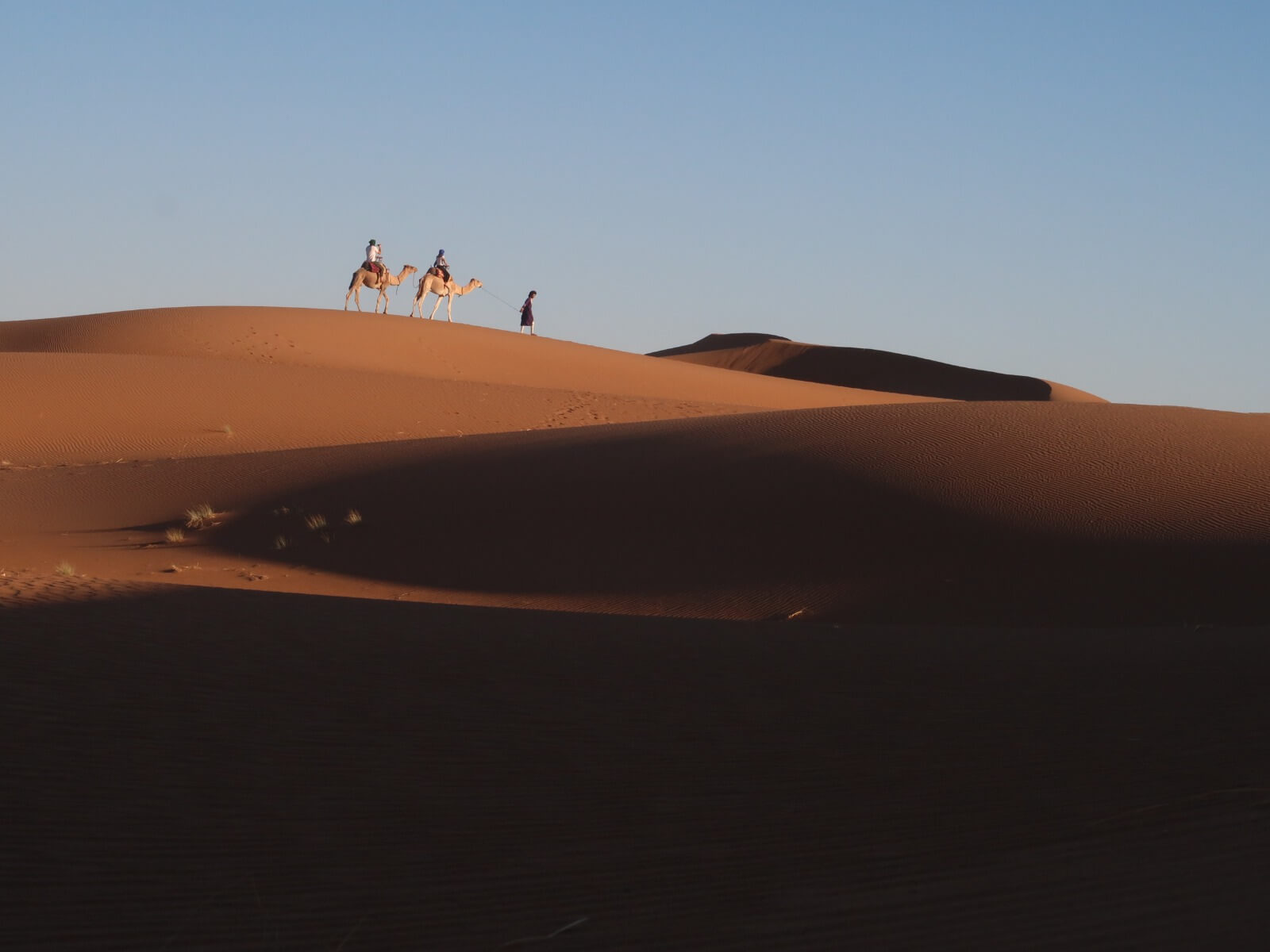
Reach the vast sand dunes of Erg Chegaga on foot, leaving the rocky desert behind as the landscape transforms into an immense sea of sand.
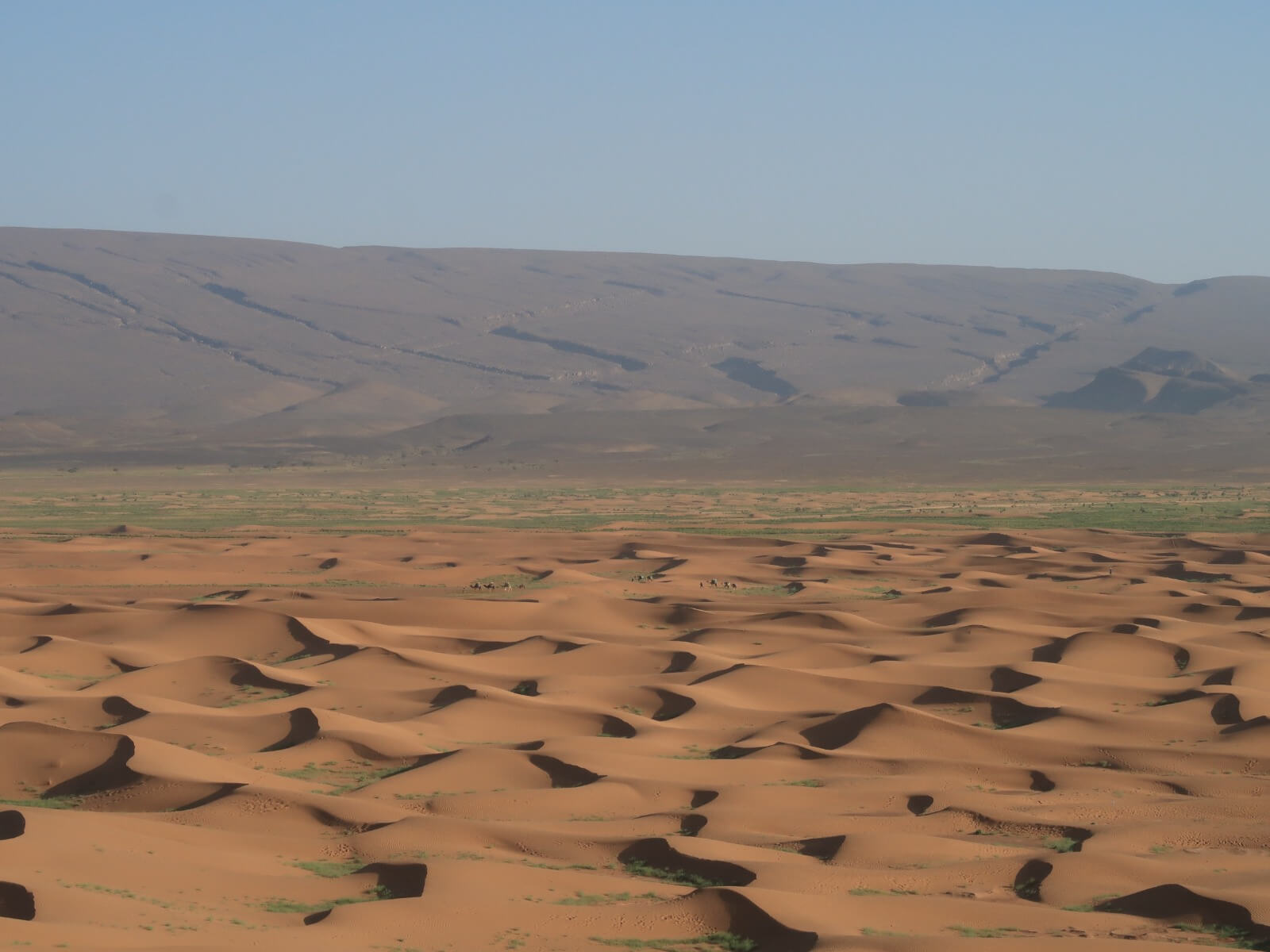
From the ancient landscapes of the Jbel Bani to the vast dunes of Erg Chegaga and the remote landscapes of Lake Iriki.
Duration
8 Days
7 Nights
Trekking
5 Days
On foot
Region
Southern Morocco
Moroccan Sahara
Landscape
Erg Chegaga
Dunes & desert
Difficulty
Moderate
Good fitness
Best Season
Oct – Apr
Cooler months
Southern Morocco
Jbel Bani & Desert Landscapes
This 8-day Sahara Desert trek takes you far beyond the traditional short desert excursion. Starting in Marrakech, the journey crosses the High Atlas before continuing deep into the landscapes of southern Morocco.
Over five days of trekking, you move through the ancient Jbel Bani mountain range, dry river valleys, rocky desert plateaus and remote oases before reaching the immense dunes of Erg Chegaga.
The route then continues towards Erg Elghoul and the vast desert landscapes surrounding Lake Iriki, creating a journey that connects mountains, stone desert, sand dunes and archaeological landscapes in one continuous expedition.
This is Sahara trekking at a slower pace — walking through the landscape rather than simply stopping to photograph it.
This is a journey built around exploration, walking and immersion. From remote desert valleys to the great dunes of Erg Chegaga, every stage reveals a different side of southern Morocco.
Reach the vast sand dunes of Erg Chegaga on foot, leaving the rocky desert behind as the landscape transforms into an immense sea of sand.
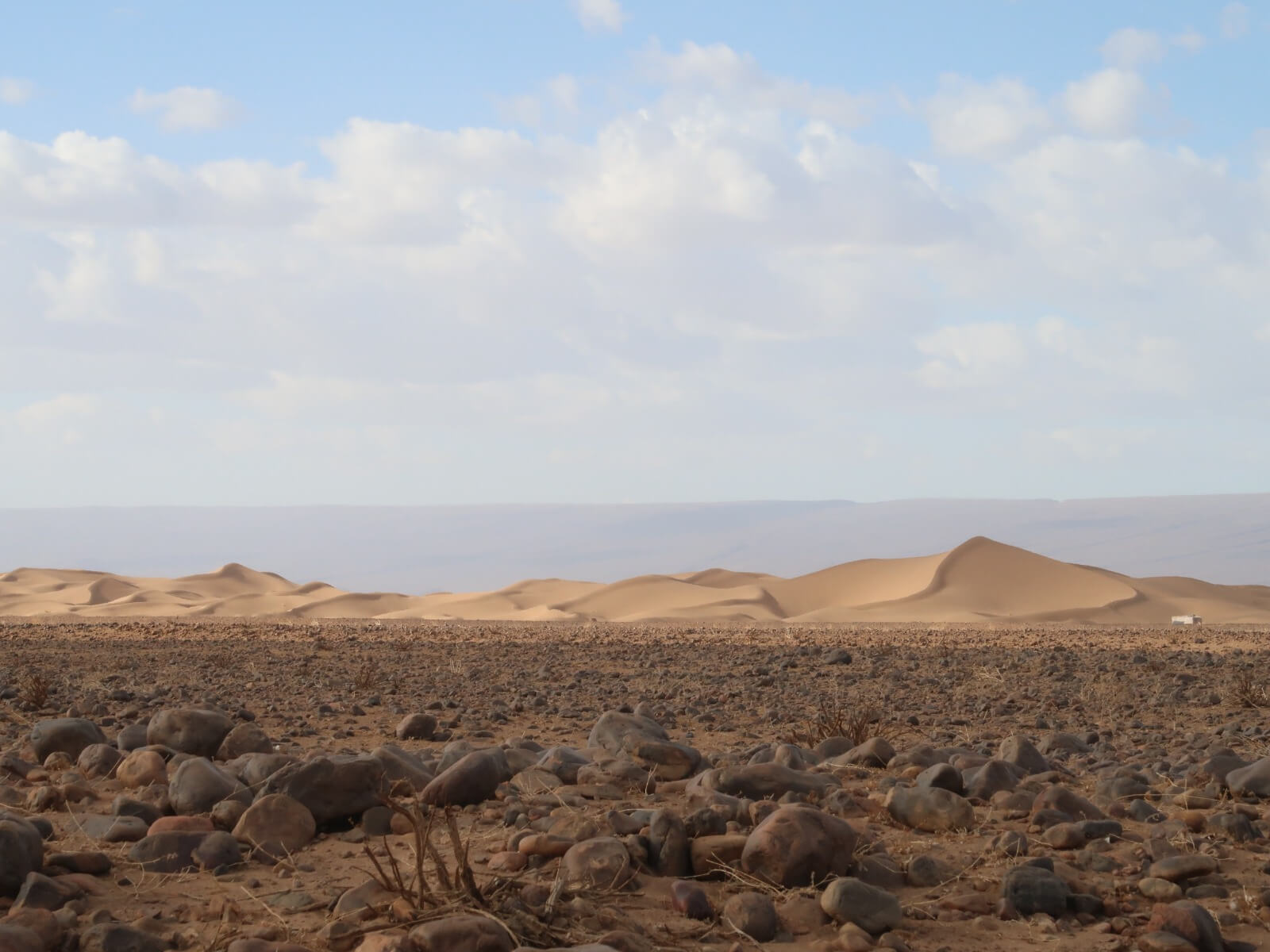
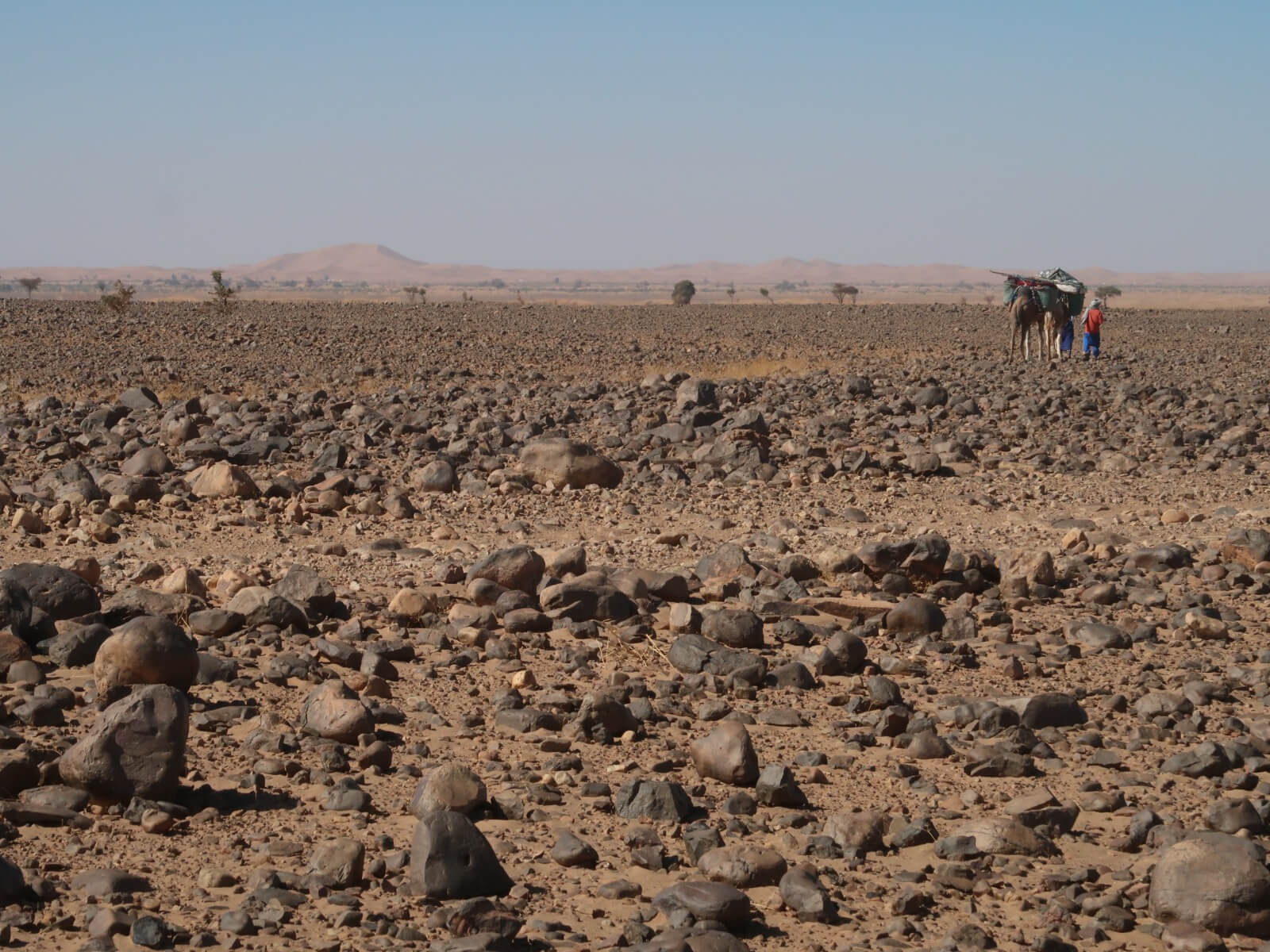
Cross a changing landscape of rocky plateaus, dry valleys, scattered acacia and rolling dunes deep in the Moroccan Sahara.
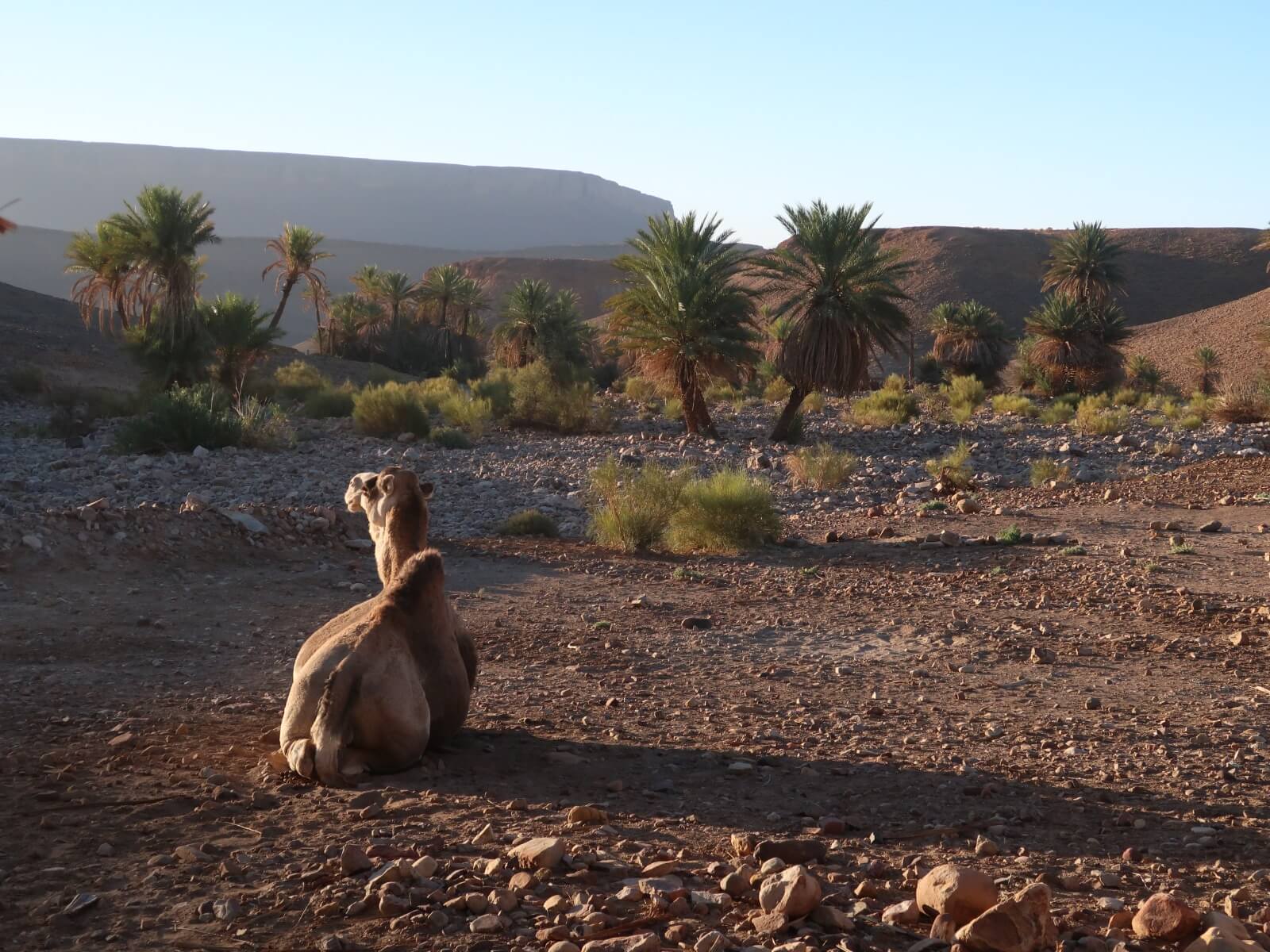
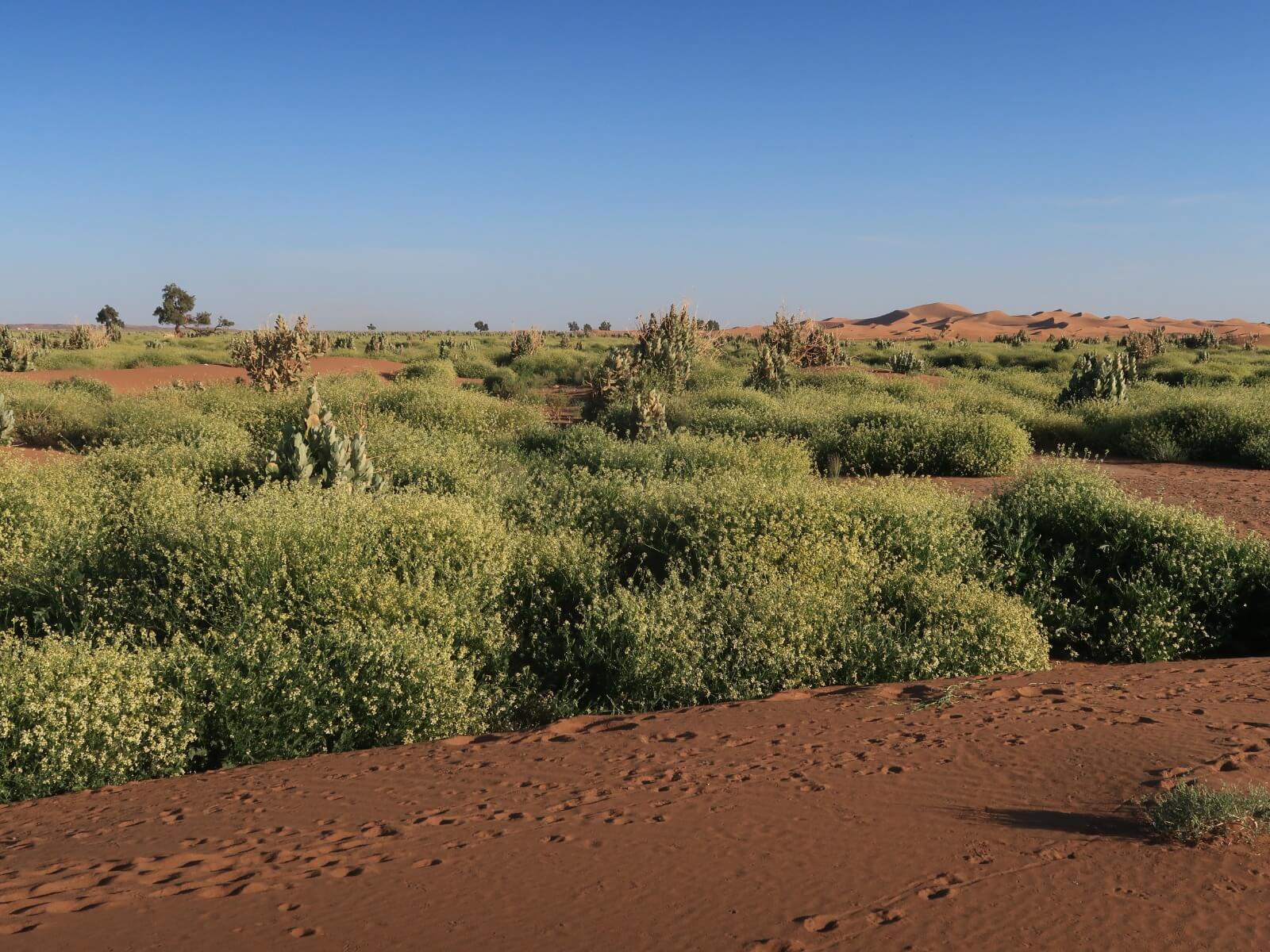
Discover unexpected pockets of life and water within the arid landscapes, revealing the remarkable contrast of the southern Moroccan desert.
Every landscape is part of the journey — from the ancient mountains of the Bani to the dunes, oases and open plains surrounding Erg Chegaga and Lake Iriki.
Follow an evolving route from the High Atlas and Jbel Bani through remote desert valleys, Erg Chegaga, Erg Elghoul and the vast landscapes surrounding Lake Iriki.
 DAY 01
Your expedition begins in Marrakech with a private departure towards the High Atlas Mountains. Crossing the Tizi n'Tichka pass, we continue south through the historic Ounila Valley and its traditional Amazigh settlements.
By afternoon we reach Aït Ben Haddou, the famous fortified ksar and UNESCO World Heritage Site. Explore its ancient earthen architecture before settling into your accommodation for the first evening of the journey.
 DAY 02
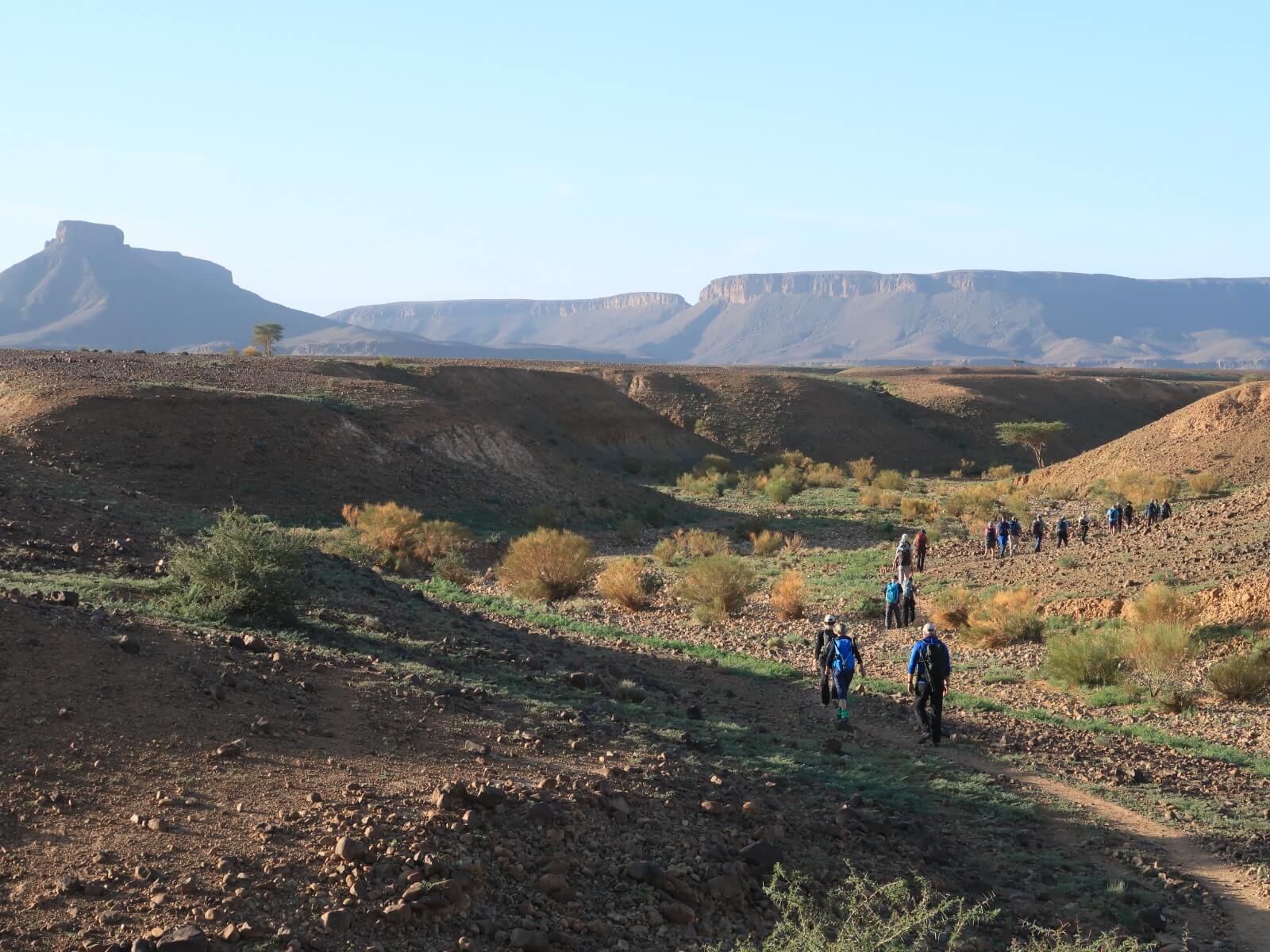
We continue south towards the Jbel Bani range and the deeper landscapes of southern Morocco. At Foum Laâchar, we meet the desert support team before beginning the first substantial trekking stage.
The trail climbs across the ancient sedimentary landscape of the Bani before descending towards dry river valleys and the remote surroundings of Bir Diabi. Our first desert camp marks the beginning of several days away from the main roads.
 DAY 03
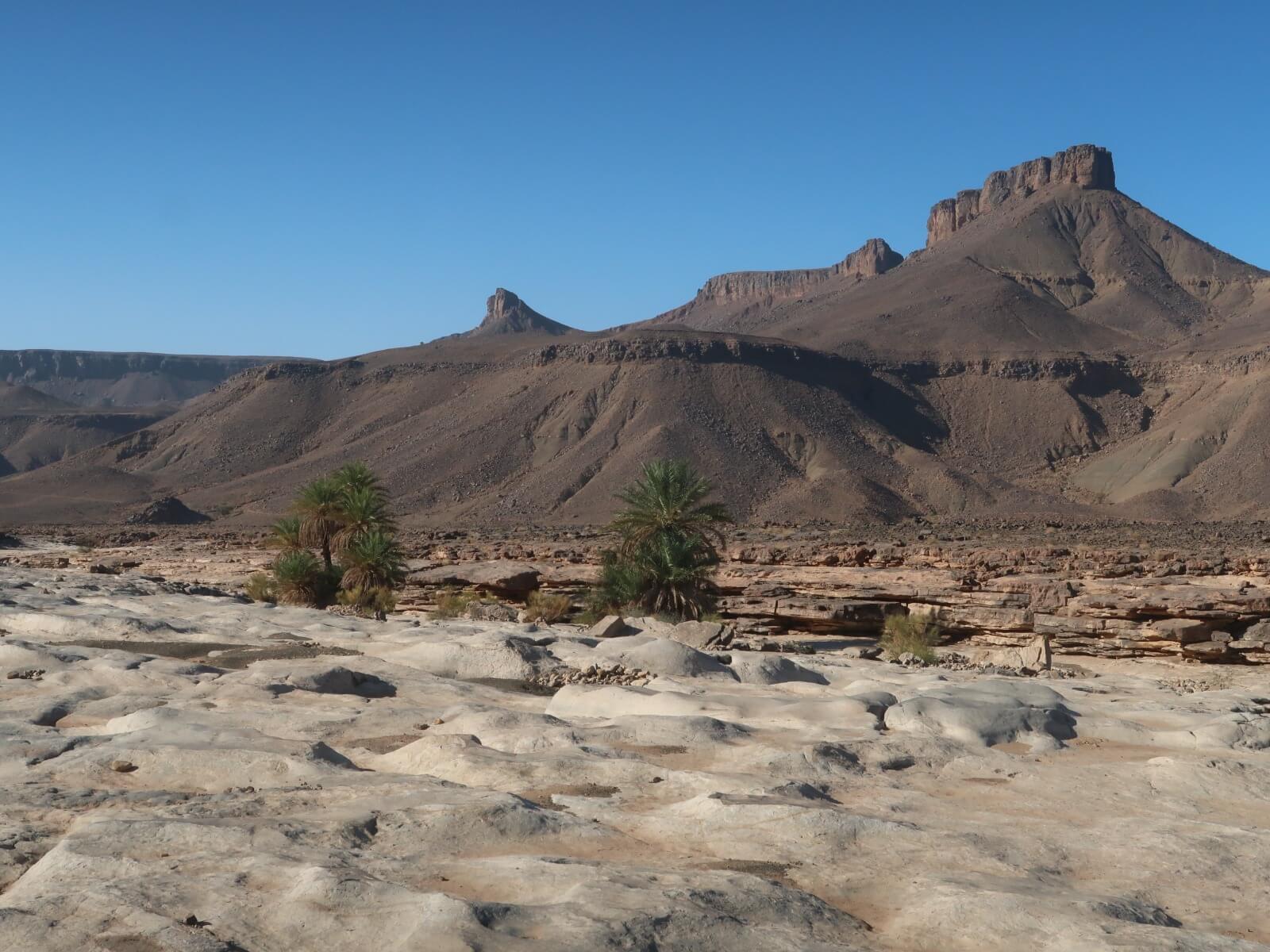
Today the route follows the dramatic terrain of the Oued Mhasser gorges. Dry riverbeds, eroded rock formations and unexpected pockets of vegetation create a striking contrast with the surrounding desert.
After a break for lunch, we continue towards a vast rocky plateau. As the terrain opens, the first distant dunes of Erg Chegaga begin to appear, signalling the next major stage of the expedition.
DAY 04We cross the broad stony plateau of Reg Amsoufa, following a landscape scattered with acacia trees and open desert horizons.
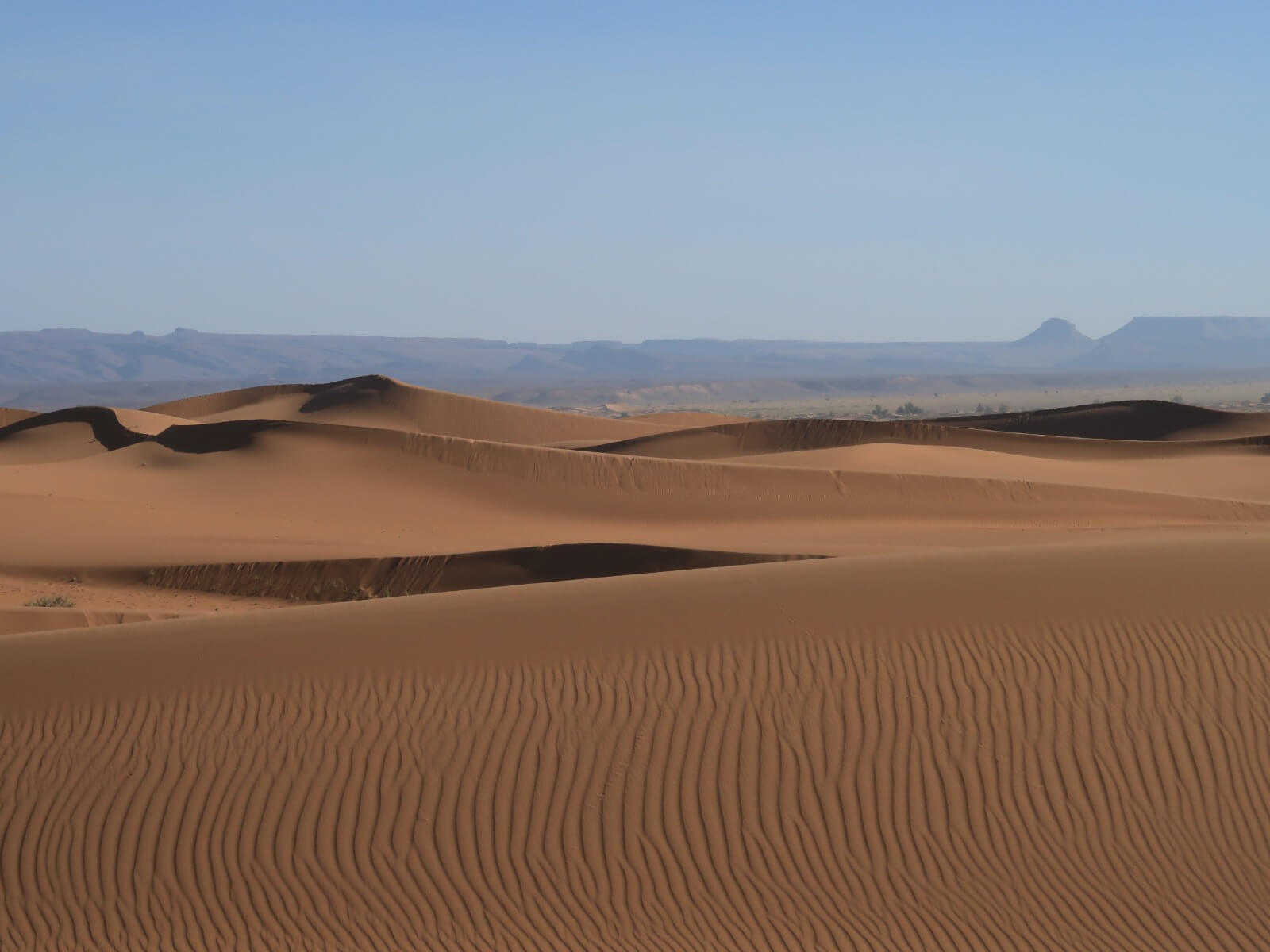
During the afternoon, the character of the landscape changes dramatically as the rocky plateau gives way to the immense sand formations of Erg Chegaga. We reach the dunes later in the day and settle into camp as the desert light begins to soften.
 DAY 05
Continue deeper into the sand sea as the route leaves the main Erg Chegaga area and follows rolling dunes, sandy corridors and open desert plains.
The changing shapes of the dunes provide a completely different experience from the rocky landscapes of the earlier stages. By late afternoon, we approach Erg Elghoul and settle into camp for another evening in the Sahara.
 DAY 06
The landscape begins to change once again as we leave the major dune formations and cross broad limestone and rocky desert terrain.
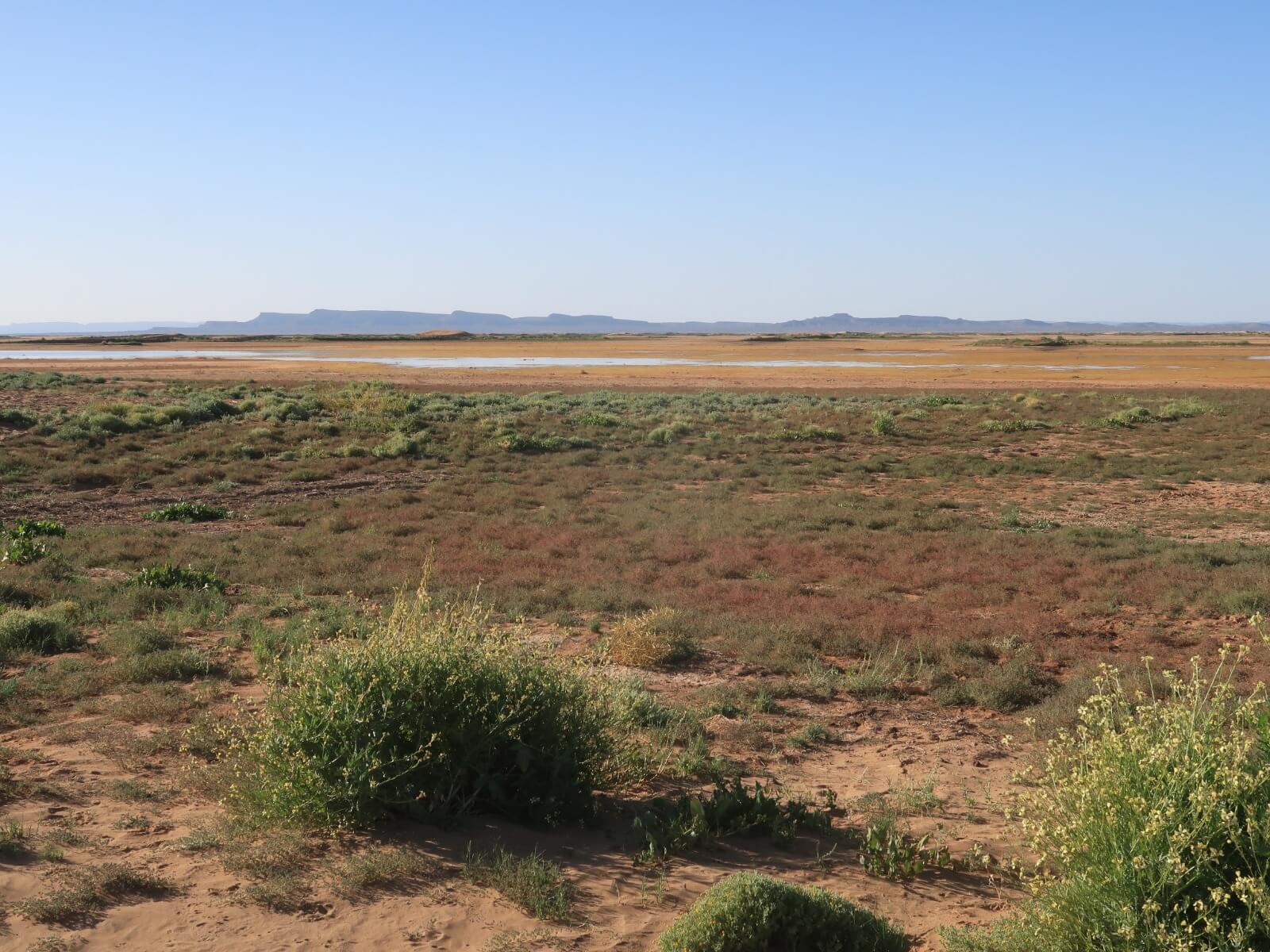
The route approaches the immense basin of Lake Iriki, a former lake whose dry expanse creates one of the most striking open landscapes in southern Morocco. After crossing the desert plateau, we establish our final remote camp of the trekking stage.
DAY 07Today we leave the trekking stage behind and continue by 4x4 across the vast landscapes surrounding Lake Iriki.
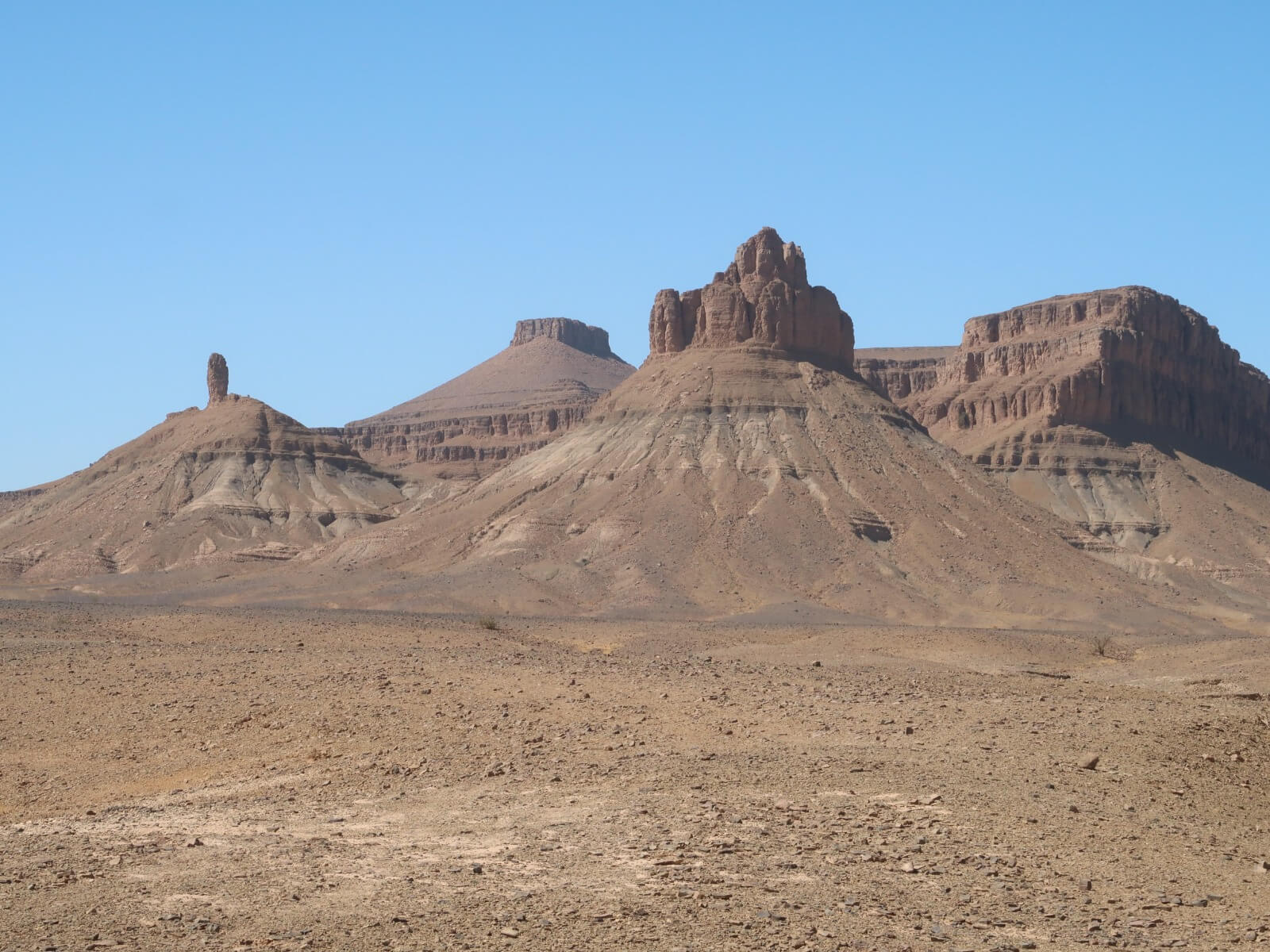
The route leads towards the M'douer Sghir massif and continues to areas known for marine fossils and ancient rock art. These archaeological landscapes reveal a fascinating chapter of the Sahara's past, when the region supported very different environments and human communities.
 DAY 08
After breakfast in Foum Zguid, we begin the final journey north towards Marrakech.
The route passes through Taznakht, known for its Amazigh weaving traditions, before climbing once again towards the High Atlas. After crossing the mountains, we continue towards Marrakech and complete the eight-day journey.
After each day on the trail, the desert becomes your home. Our mobile camp moves with the expedition, creating a comfortable base from which to experience the silence, landscapes and extraordinary night skies of southern Morocco.
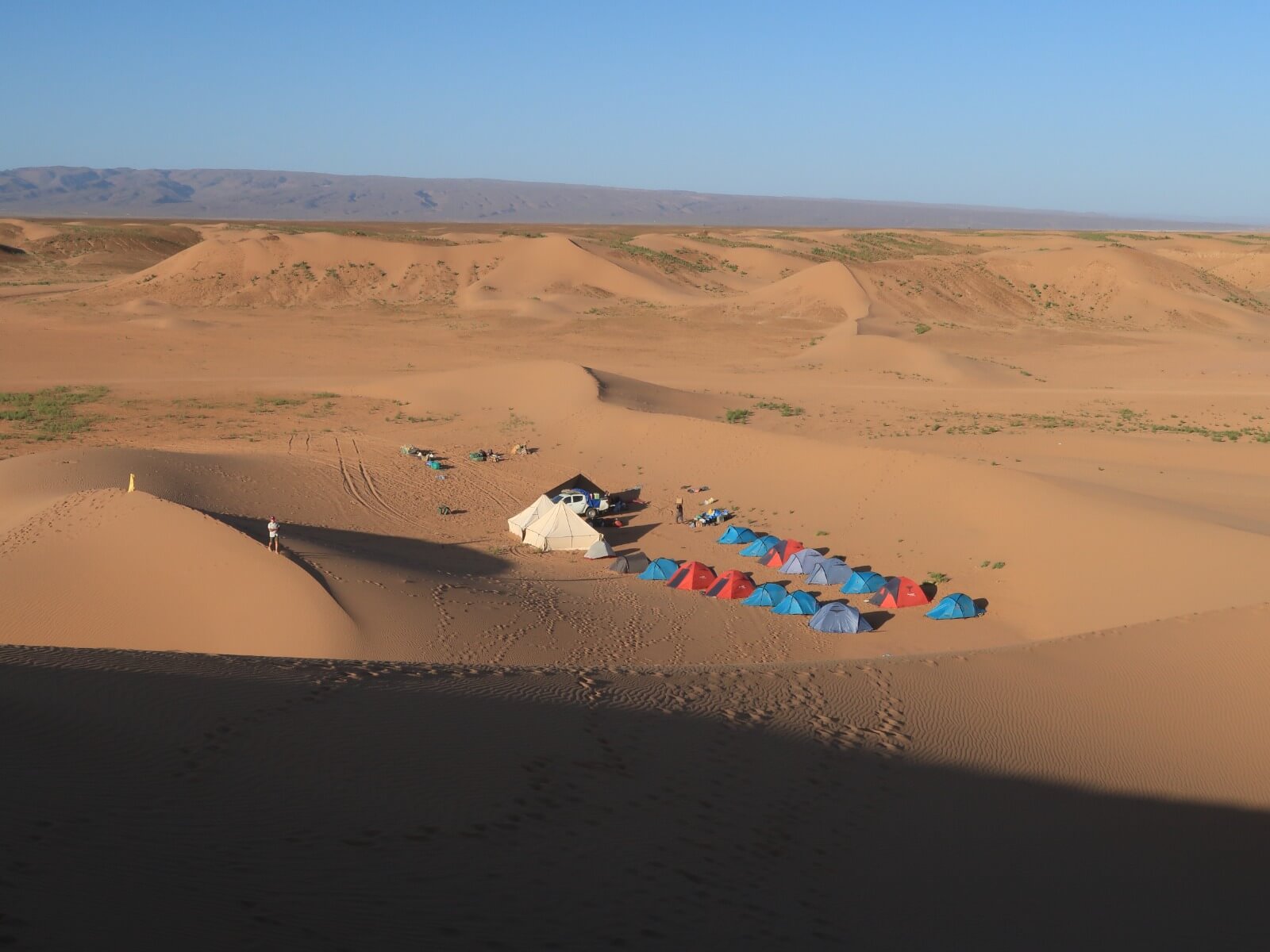
Our camp moves with the route, allowing you to spend the night deep inside the desert rather than returning to a busy tourist base.
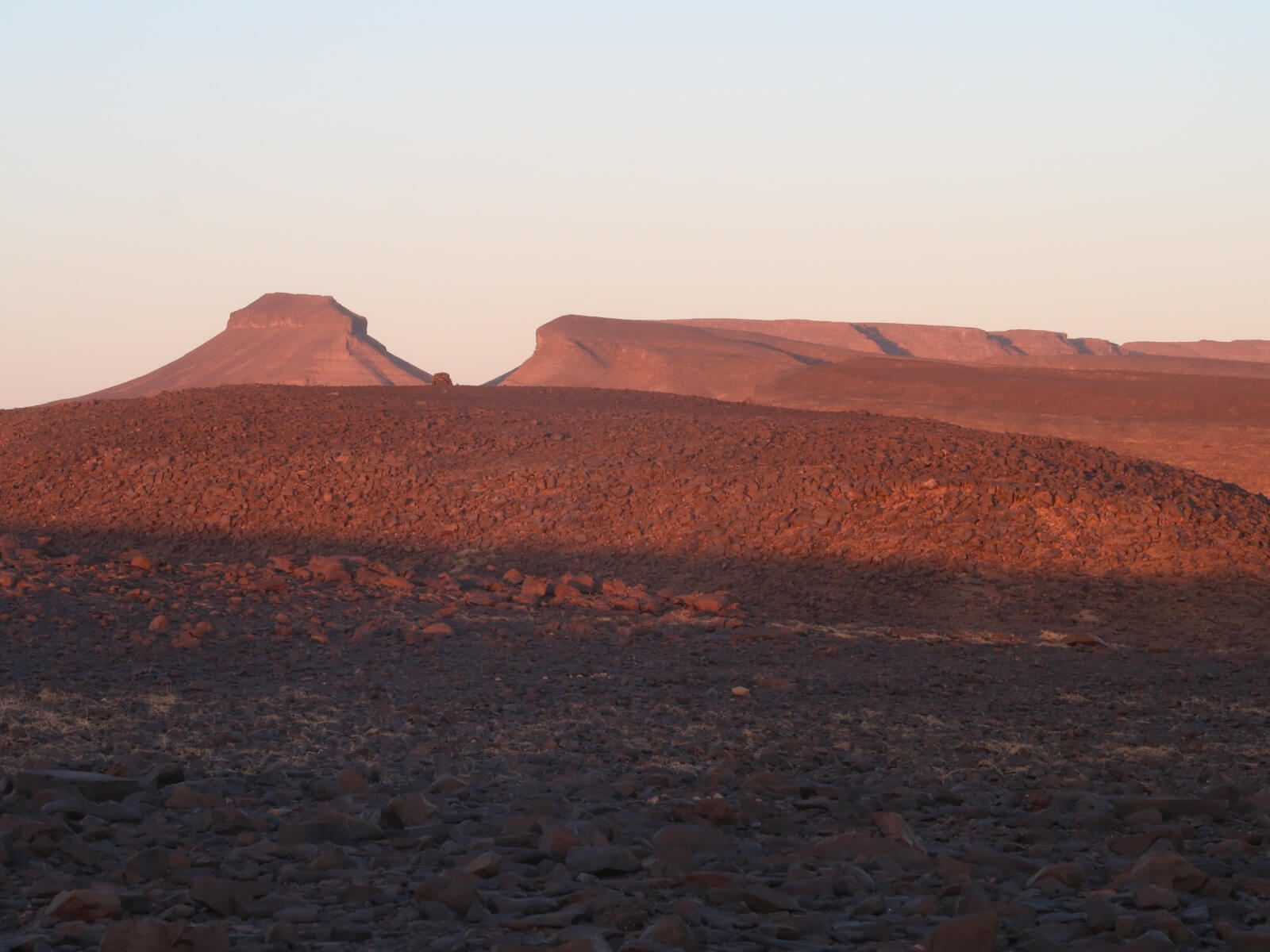
After a full day of trekking, return to a carefully prepared camp designed for rest and recovery.
Enjoy fresh Moroccan meals prepared by the expedition team after each day on the trail.
Slow down after sunset with traditional music, conversation and the quiet atmosphere of the desert.
Far from city lights, the Sahara reveals an incredible night sky filled with stars.
The desert is not simply something we pass through. For several nights, it becomes part of the experience — from the first fire after sunset to the first light over the dunes in the morning.
The expedition is designed so you can concentrate on walking, exploring and experiencing the Sahara. Our local team takes care of the logistics throughout the journey.
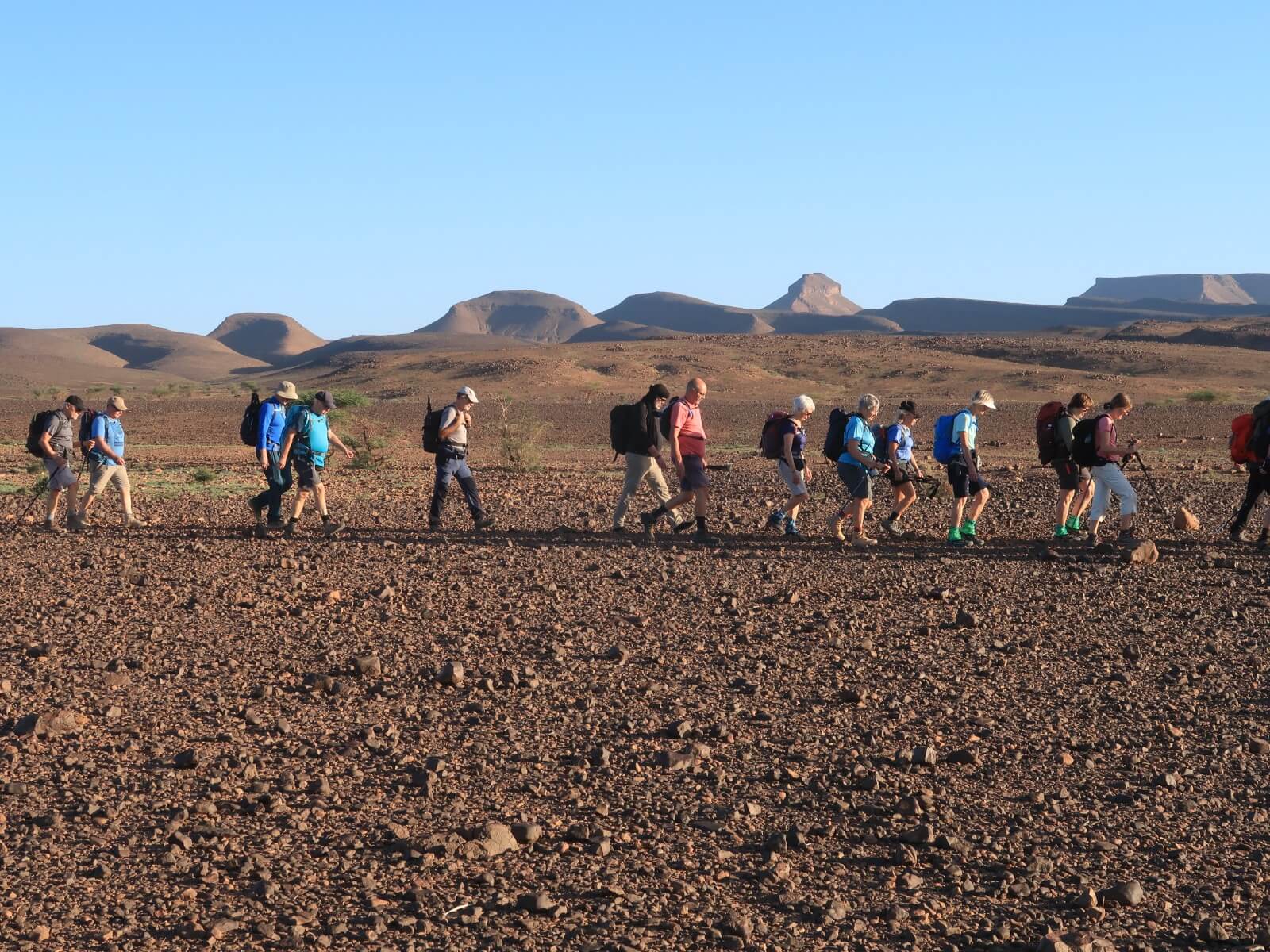
Travel through the southern Moroccan desert with a local mountain and wilderness team who understands the terrain, communities and rhythm of the region.
Experienced local guiding throughout the expedition, with route knowledge and support across remote desert terrain.
A fully supported camp moves with the expedition, allowing you to spend several nights deep in the Sahara rather than returning to tourist centres.
Pack camels transport the expedition equipment, camping supplies and main luggage so you only carry your personal day pack.
Breakfasts, lunches and dinners are prepared throughout the trekking stages, with water provided during the expedition.
Private road transfers connect the trekking route with Marrakech, while 4x4 vehicles support the desert exploration stages around Lake Iriki.
Comfortable accommodation is provided at the beginning and end of the expedition, creating a smooth transition between Marrakech and the remote desert stages.
Your personal day pack should contain the essentials you need while walking — water, sun protection, camera, warm layer and personal items. The expedition team handles the heavier logistical equipment.
The route is designed for people who enjoy long days outdoors and want to experience the Moroccan Sahara on foot. Good preparation makes the journey more comfortable and enjoyable.
You do not need technical climbing experience for this expedition. The challenge comes from the length of the journey, repeated days of walking and the changing desert terrain.
Several trekking stages last approximately 4–6 hours depending on terrain and conditions.
Expect rocky plateaus, dry riverbeds, sand, dunes and open desert landscapes.
The desert environment requires good hydration, sun protection and appropriate clothing.
The expedition is trekking rather than mountaineering, with no technical climbing required on the standard route.
Keep your day pack light and practical. Your main luggage and expedition equipment are handled by the support team.
The objective is to keep your personal walking pack comfortable. Avoid carrying unnecessary equipment; the expedition logistics are designed to take care of the heavier camp and support equipment.
If you regularly hike, trek or spend full days walking outdoors, this expedition should be within reach with appropriate preparation. If you are unsure about your fitness level, contact us before booking so we can discuss the route with you.
The southern Moroccan desert changes dramatically throughout the year. For comfortable trekking conditions, we recommend planning this expedition between autumn and spring.
Cooler temperatures return to the Sahara, making long walking stages considerably more comfortable. The desert landscapes can also take on subtle changes after seasonal weather.
Winter generally offers some of the most pleasant daytime conditions for desert trekking. Nights can become cold, particularly in open desert camps, so warm layers and a suitable sleeping system are important.
Spring brings increasingly warmer days while remaining suitable for desert trekking earlier in the season. Conditions become progressively hotter as April advances.
The Sahara can become extremely hot during the summer months. Long-distance trekking in exposed desert terrain is therefore not recommended during the hottest period of the year. We schedule this expedition around the cooler months to provide a safer and more enjoyable trekking experience.
Cooler autumn, winter and spring days make extended walking much more comfortable.
Temperatures can drop significantly after sunset, especially during winter camping.
Desert conditions can vary, so the final route and daily schedule remain subject to local weather and terrain.
For an 8-day Sahara Desert trek in Morocco, the period from October through April generally offers the most suitable conditions for combining long-distance trekking, desert camping and exploration of Erg Chegaga and the Lake Iriki region.
The Moroccan Sahara is far more than endless sand. This expedition crosses mountains, rocky plateaus, dry river valleys, hidden oases, vast dune systems and the extraordinary basin of Lake Iriki.
Walk into one of southern Morocco's most spectacular dune landscapes, where the scale of the Sahara becomes visible in every direction and the shapes of the sand change with the movement of the wind and light.
Ancient dry river landscapes shaped by water, wind and time.
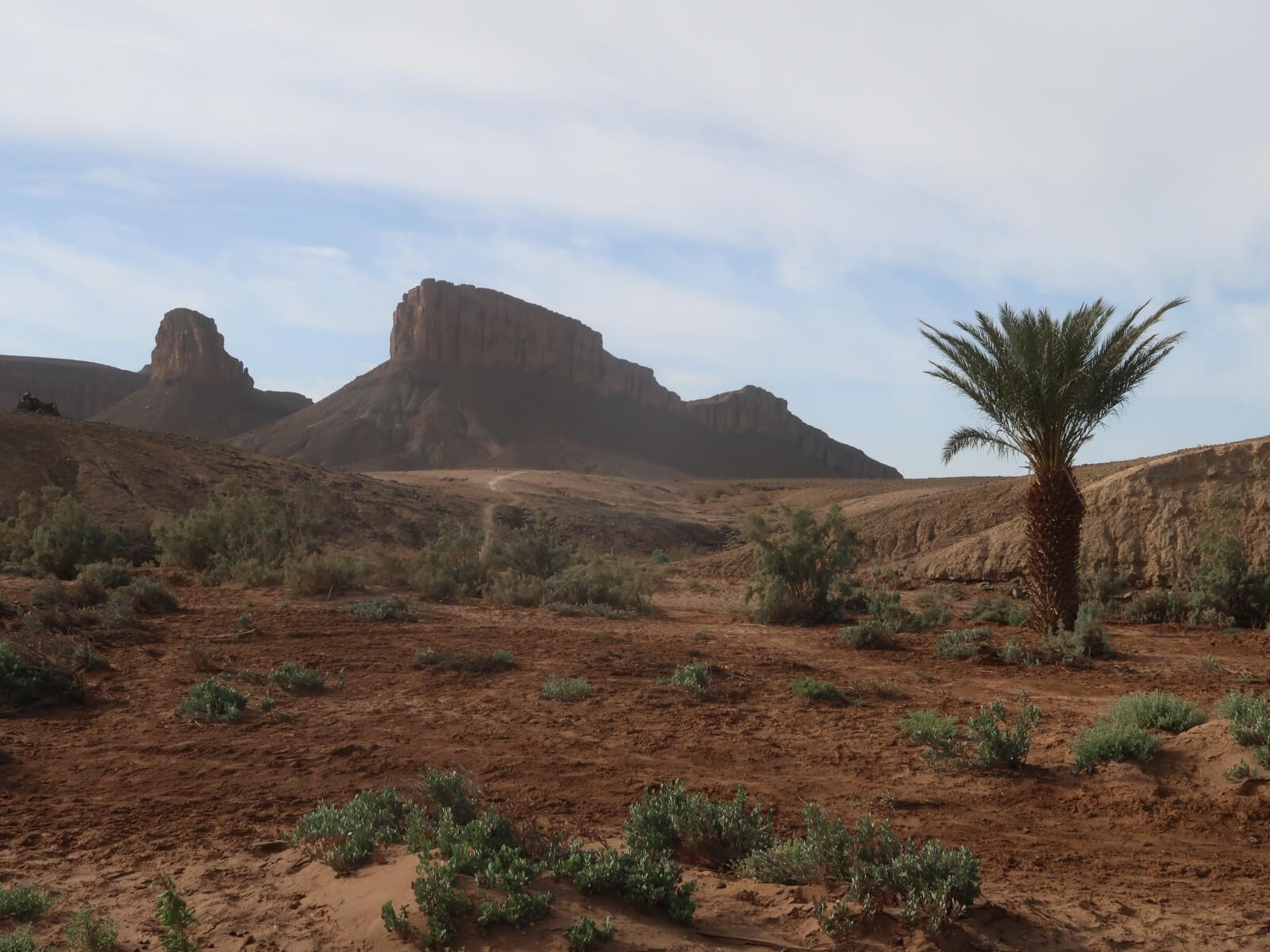
Rugged rock formations rising from the open desert.
A vast dry lake basin stretching across the desert horizon.
A distinctive mountain massif encountered during the desert exploration stage.
Unexpected pockets of water and vegetation hidden within the arid landscape.
Eroded rock formations and dry river channels cut through the ancient desert terrain.
From the rocky landscapes of the Jbel Bani to the immense dunes of Erg Chegaga and the open basin of Lake Iriki, this is a journey through several different faces of the Moroccan Sahara.
From the first transfer in Marrakech to the final return journey, our team coordinates the essential logistics so you can focus on the landscapes, the walking and the experience of the Sahara.
The complete expedition includes transfers, accommodation, five main wilderness trekking stages and the return journey to Marrakech.
Walk across varied southern Moroccan terrain including rocky plateaus, dry riverbeds, dunes and open desert.
Airport or hotel pickup in Marrakech, followed by a private journey into southern Morocco and return transfer at the end of the expedition.
Comfortable accommodation before and after the wilderness stages, combined with supported mobile desert camping along the route.
Meals are provided throughout the trekking stages, with fresh Moroccan-style food prepared by the expedition team.
Your main luggage is transported by the expedition logistics team. During the walking stages you only need to carry a comfortable personal day pack.
Pack camels support the expedition by carrying camping equipment and essential supplies through the remote desert.
Private vehicles connect Marrakech with the expedition route, with 4x4 support used for the Lake Iriki and archaeological exploration stages.
Small groups allow for a more personal experience, smoother logistics and greater immersion in the landscapes and communities of southern Morocco.
The Sahara is a remote environment. Weather, terrain, road conditions and local circumstances may require adjustments to the daily route or schedule.
Our priority is to keep the expedition safe, enjoyable and authentic. The guide may adapt walking times, camps or transfers when necessary because of weather, terrain or operational conditions.
Everything you need to know before joining our 8-day Sahara Desert trekking expedition through southern Morocco.
The preferred trekking season is generally from October through April, when daytime temperatures are more suitable for long-distance walking. Winter nights can be cold, particularly when camping in exposed desert areas, so warm layers are important.
The expedition is designed for people in good physical condition who are comfortable walking for several hours on consecutive days. There is no technical climbing, but the combination of distance, sand, rocky terrain and desert exposure makes it an endurance-based trek.
No. The expedition is supported by a desert logistics team and camel caravan. Camping equipment, food and other heavy supplies are transported for you. You only need to carry your personal day pack during the walking stages.
The expedition begins in Marrakech with pickup from your hotel or Marrakech airport. After crossing the High Atlas and travelling into southern Morocco, the expedition finishes with the return journey to Marrakech on Day 8.
No. One of the defining features of this expedition is the variety of landscapes. The route includes rocky plateaus, dry riverbeds, desert valleys, oases, sand dunes and the vast open landscapes surrounding Erg Chegaga and Lake Iriki.
Bring comfortable trekking footwear, a small day backpack, reusable water bottle, sun protection, sunglasses, breathable clothing, a warm layer for evenings, personal medication and basic personal essentials. A detailed equipment list can be provided before your departure.
Yes. Solo travelers can join a private expedition or request to join a suitable small group, depending on availability. Contact us with your preferred dates and group size so we can recommend the best arrangement.
The expedition is designed around small groups and private departures can be arranged. Keeping groups limited allows for a more personal experience and greater flexibility in the remote desert environment.
Yes. Desert travel is influenced by weather, terrain, road conditions and local circumstances. Your guide may adjust walking times, camps or transfers when necessary to maintain a safe and enjoyable expedition.
Still have a question about the Sahara Desert expedition?
Talk to meLeave the usual desert excursions behind and experience southern Morocco on foot — from remote valleys and hidden oases to the immense dunes of Erg Chegaga and the ancient landscapes of Lake Iriki.