Southern Morocco
Sahara
Desert Morocco
Where the Atlas meets the desert.
Follow the landscapes of southern Morocco through vast desert plains, ancient routes, oasis valleys and remote communities shaped by life at the edge of the Sahara.
Where the Atlas meets the desert.
Follow the landscapes of southern Morocco through vast desert plains, ancient routes, oasis valleys and remote communities shaped by life at the edge of the Sahara.
The Sahara Desert of Morocco is not simply a sea of sand. It is a vast and changing landscape where mountains, rocky plateaus, dry valleys, oases and dunes come together.
Moroccan Sahara
A desert shaped by distance, water and movement
Travelling into the Sahara from southern Morocco is a gradual change of landscape. The mountains and valleys slowly give way to increasingly open terrain, where vegetation becomes sparse and the horizon stretches far beyond the road.
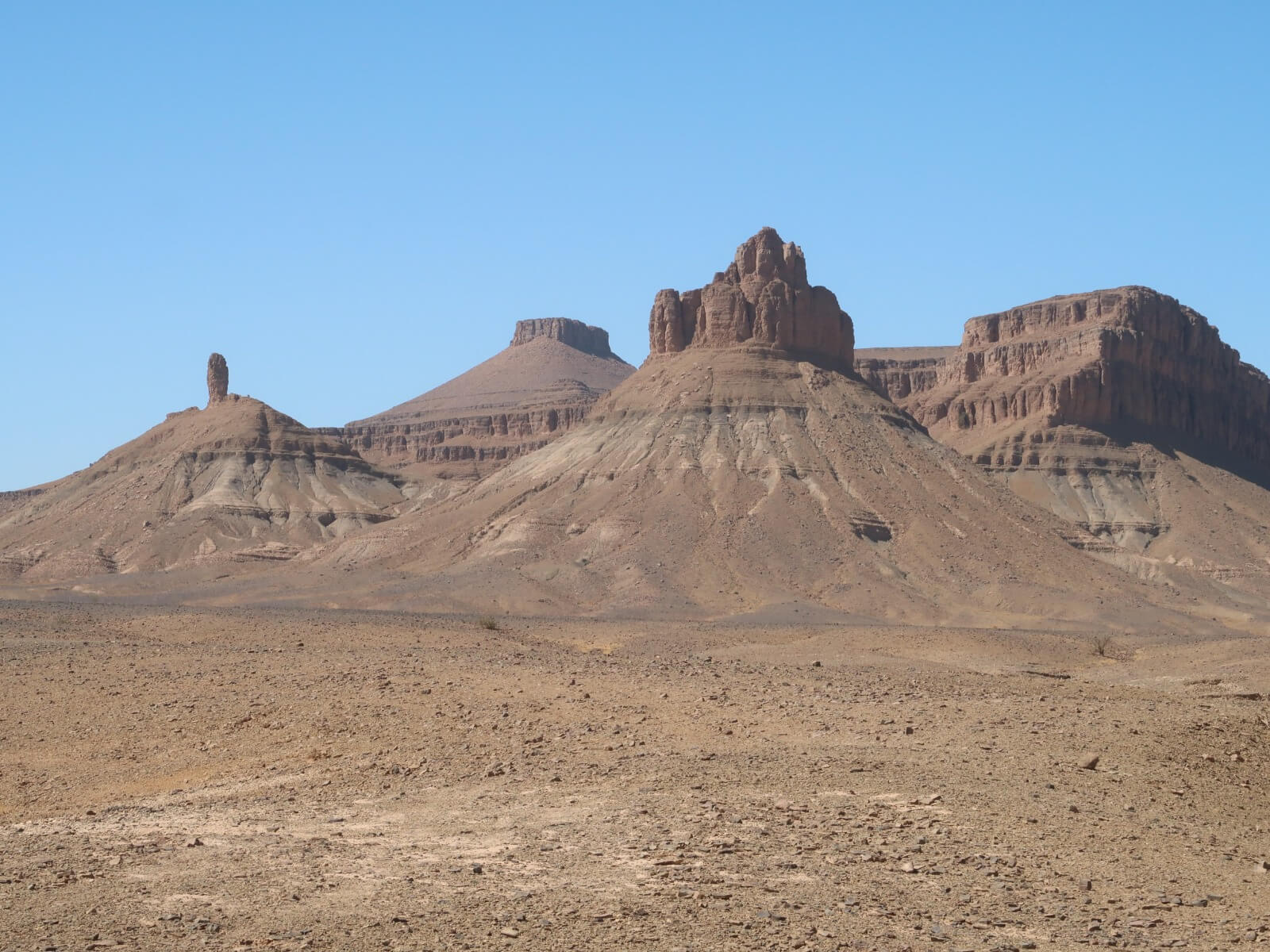
Along the way, the desert reveals many different faces. There are broad rocky plains, weathered mountain formations, dry river valleys, palm-filled oases and, in certain regions, immense fields of golden sand dunes.
This is the Sahara we want to share with you: not simply a destination reached for a photograph, but a landscape experienced slowly, on foot and through the people, routes and environments that have shaped southern Morocco for generations.
Dunes, rocky plains and desert plateaus.
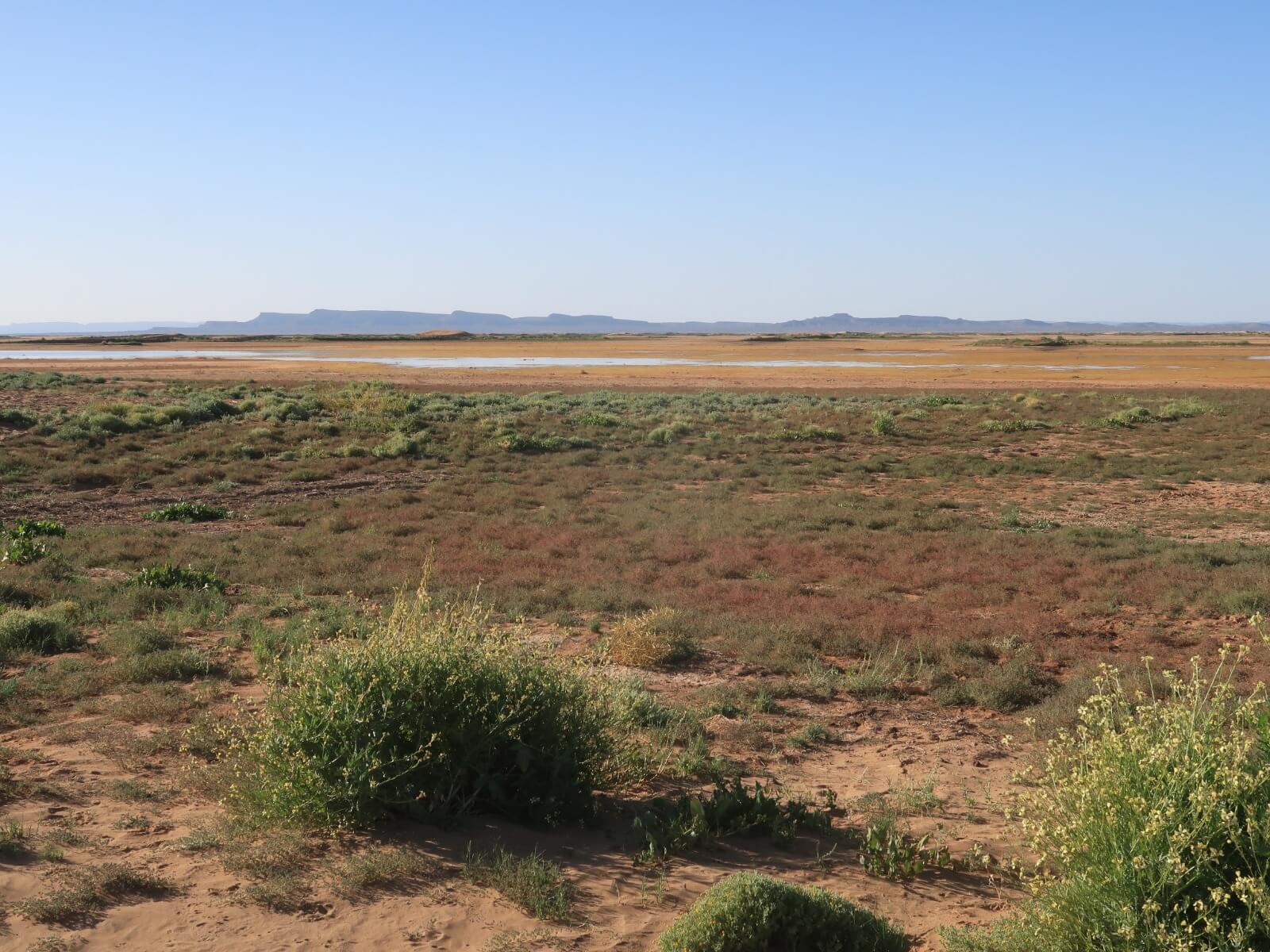
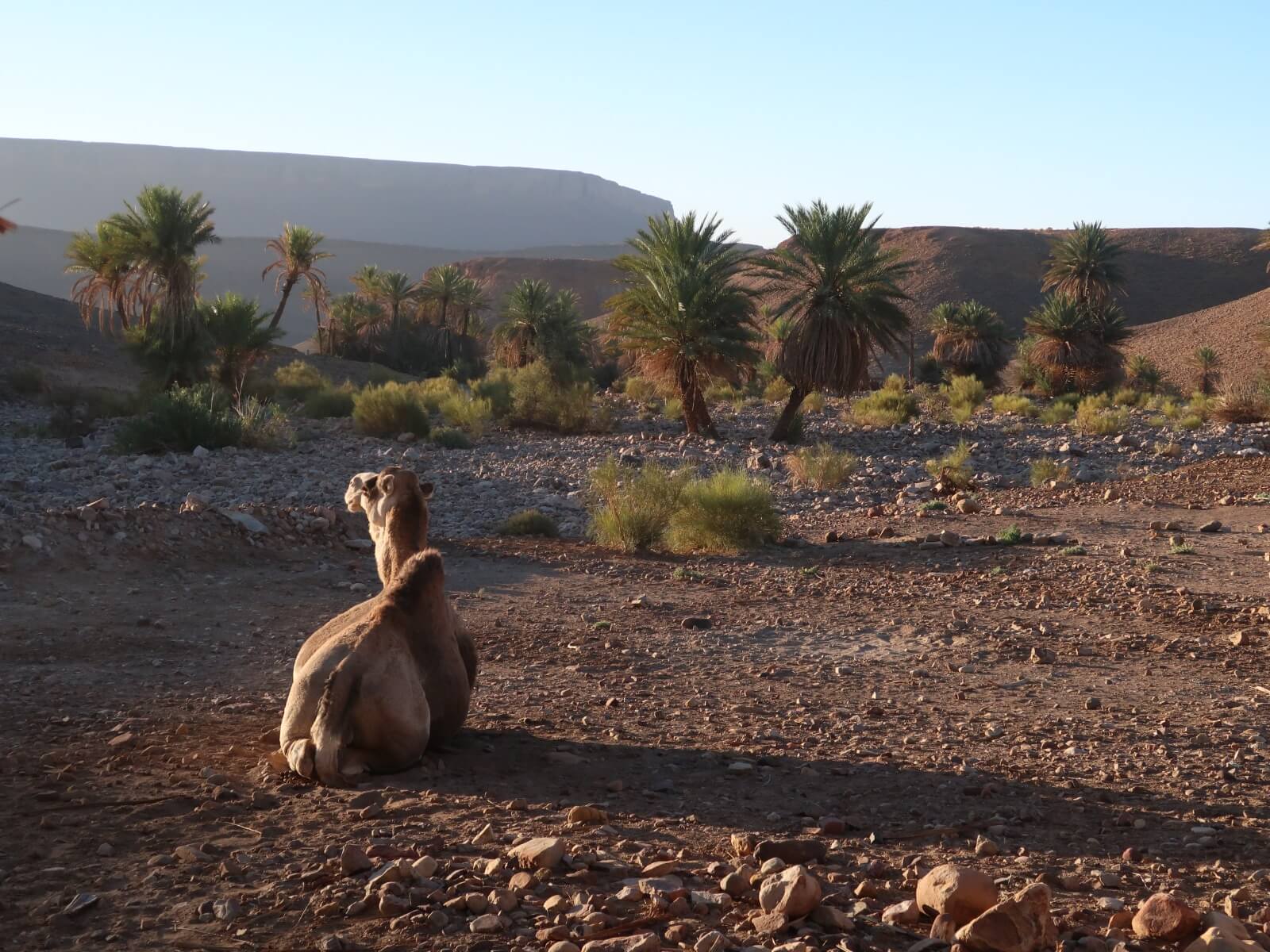
Water creates pockets of life in the desert.
Discover the desert beyond the usual highlights.
Southern Morocco reveals a remarkable variety of desert environments. The landscape changes constantly as mountains, stone, gravel, sand and water shape the route.
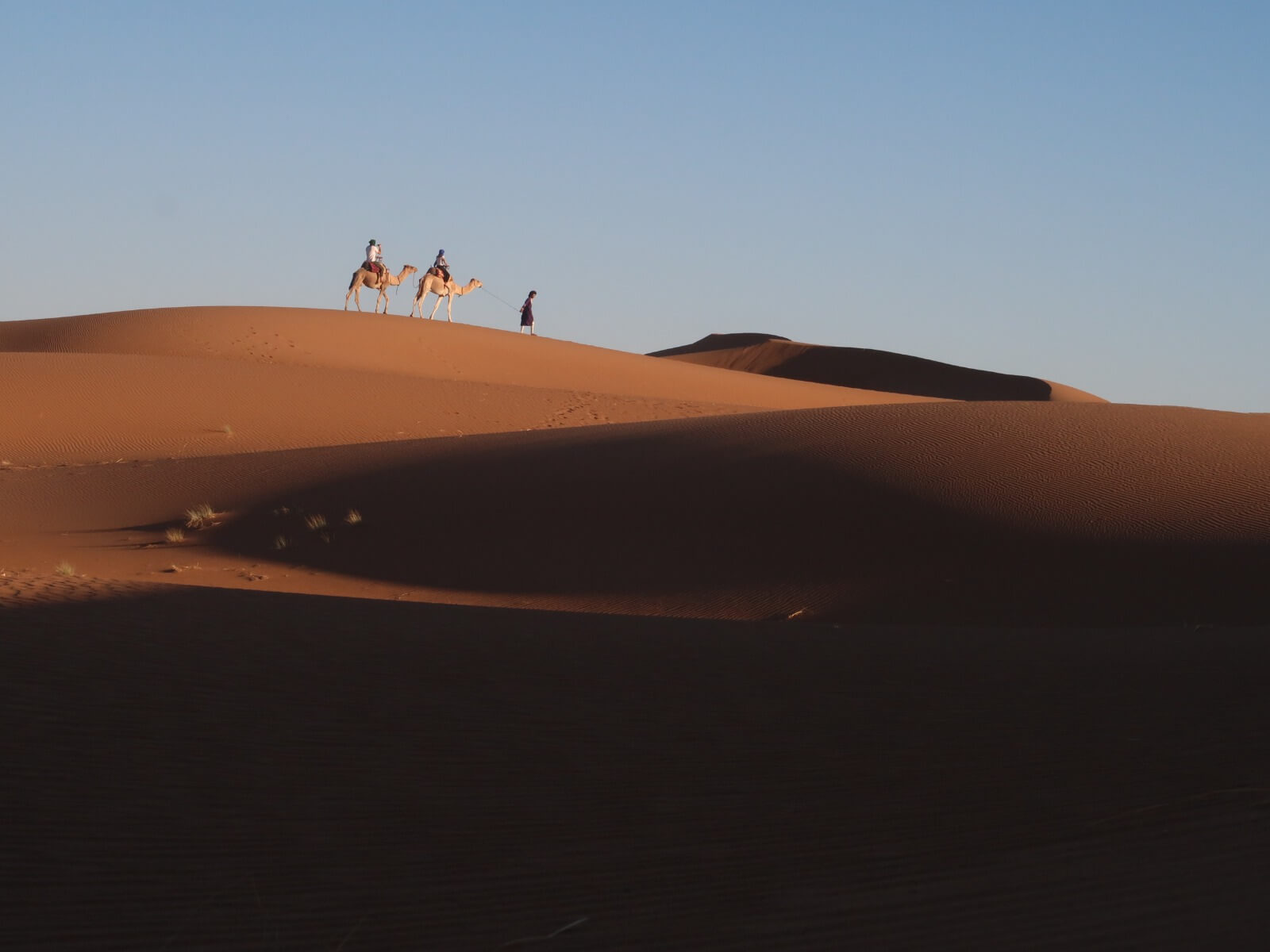
Sweeping ridges of wind-shaped sand create some of Morocco's most iconic desert scenery.
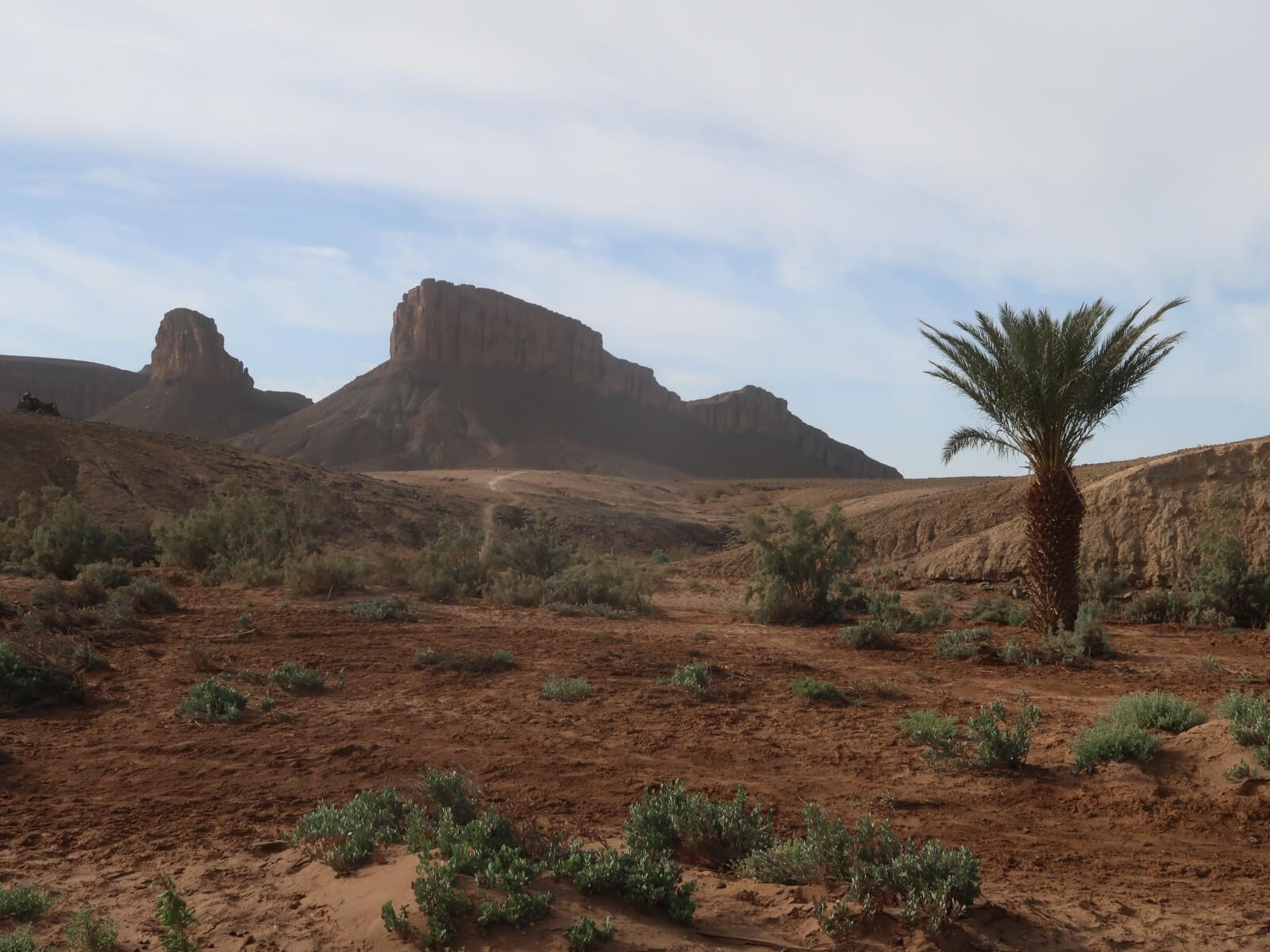
Broad stone and gravel surfaces form vast open spaces between mountains and dune fields.
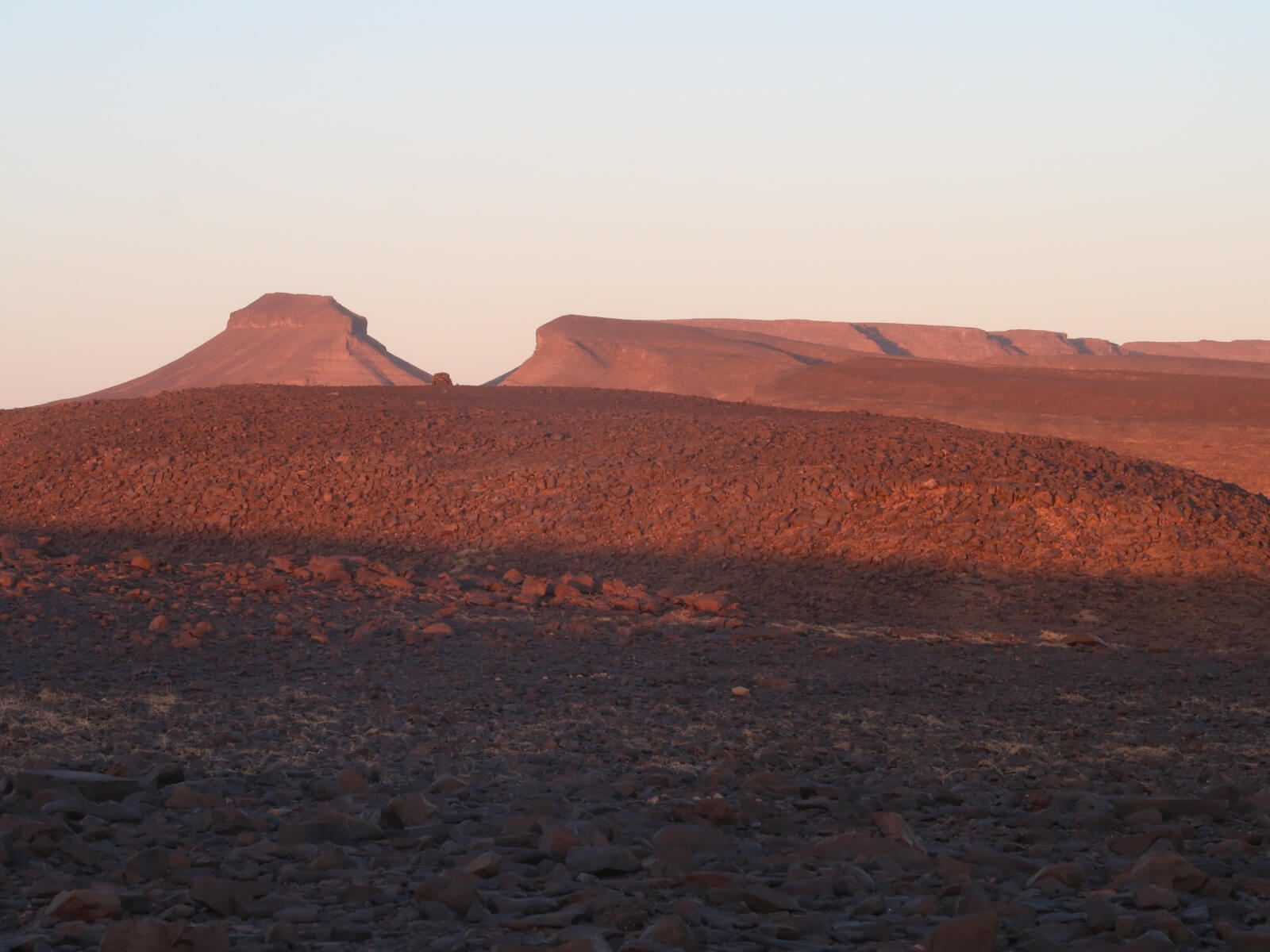
Elevated desert terrain reveals wide horizons and dramatic geological formations.
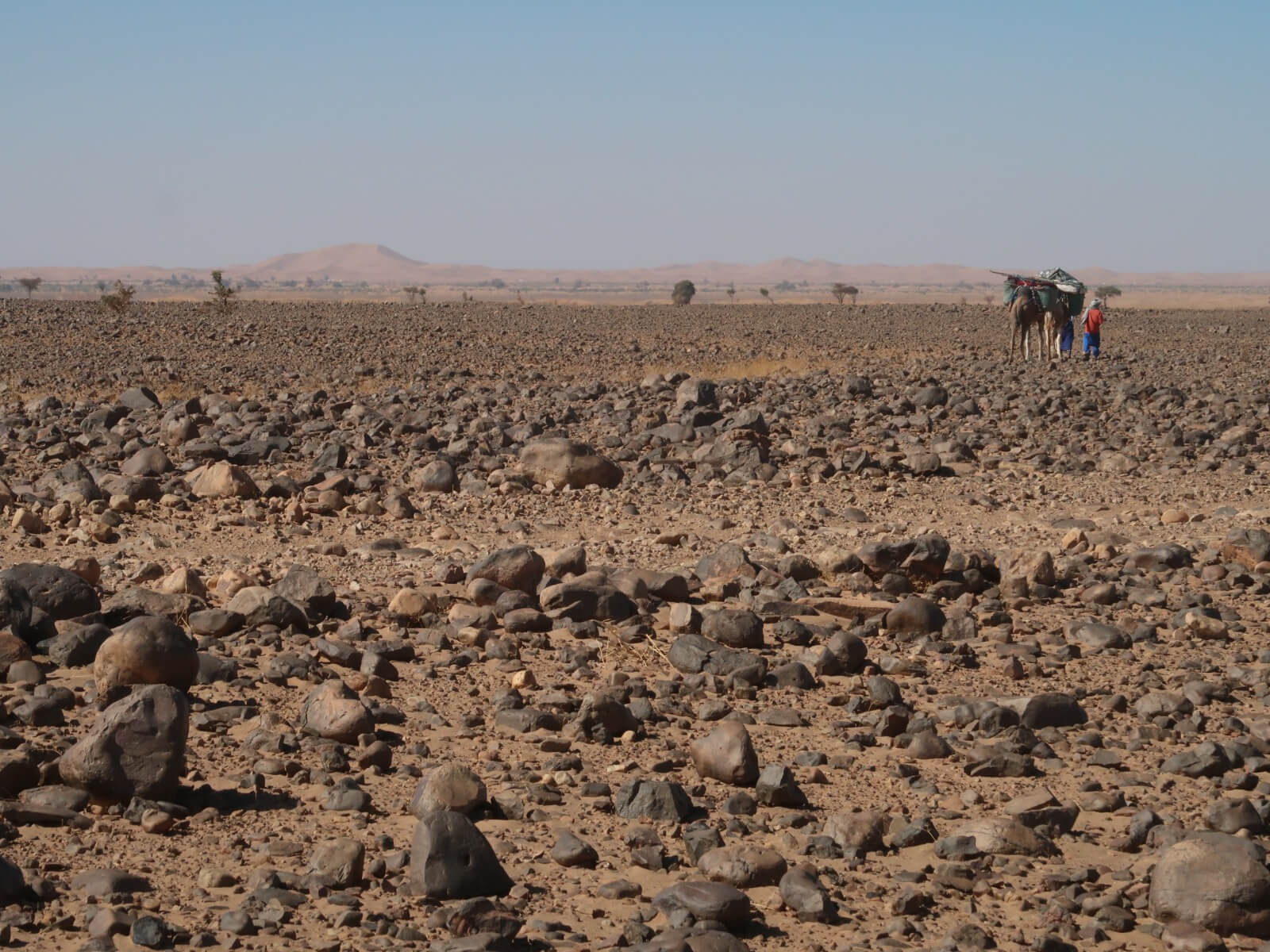
Water transforms the desert, creating green corridors where communities, agriculture and wildlife can thrive.
A Sahara journey can move through several of these environments in a single expedition. This changing terrain is part of what makes southern Morocco such a rewarding region to explore on foot.
In the Sahara, water is more than a resource. It is the foundation around which settlements, agriculture, travel and desert life have developed for generations.
Desert Life
Green valleys and palm groves emerging from an arid landscape
Across southern Morocco, oases form striking pockets of vegetation within an otherwise dry environment. Where reliable water reaches the surface or can be channelled through traditional irrigation systems, palm groves, gardens and settlements have developed.
These fertile areas have historically provided essential stopping points for people travelling across the desert. They also support agriculture and communities whose lives remain closely connected to the availability and careful management of water.
Walking through an oasis reveals a completely different side of the Sahara. The contrast between green vegetation, earth-coloured villages and the surrounding dry mountains and desert is one of the defining experiences of southern Morocco.
Springs, wells and traditional irrigation make settlement possible in arid regions.
Oases support date palms, crops and small-scale agriculture adapted to the desert environment.
The Sahara is not an empty landscape. Across southern Morocco, communities have developed ways of living, travelling and working within one of the world's most demanding environments.
For centuries, people in southern Morocco have adapted their lives to an environment where water is scarce and distances can be vast. Communities developed around oases, valleys and reliable water sources, while pastoral groups moved with their livestock according to seasonal conditions.
Desert travel also created connections between settlements. Footpaths, grazing routes and long-distance caravan routes linked the southern oases with the mountains and wider regions of Morocco and the Sahara.
Today, modern roads have transformed travel across the region, but traditional knowledge of water, livestock, weather and the landscape remains an important part of life in many rural areas.
Seasonal movement and livestock remain connected to the rhythms of the landscape.
Knowledge of water, terrain and seasonal conditions has always been essential to desert travel.
Desert Communities
People, routes and traditions connected to the landscape
Long before modern roads crossed southern Morocco, movement through the desert depended on knowledge of water, terrain, seasons and the network of settlements scattered across the region.
Desert Heritage
Routes shaped by water, distance and generations of travel
Southern Morocco has long been connected by routes linking mountain regions, oasis settlements and the wider Sahara. Travellers depended on established knowledge of water sources and stopping places to cross the dry landscapes.
Along these routes, settlements and fortified earthen architecture developed around important sources of water and agriculture. In parts of southern Morocco, traces of this history remain visible in villages, kasbahs, old tracks and oasis landscapes.
Travelling through the region today offers a chance to encounter these layers of history while moving through the same broad landscapes that have connected southern communities for generations.
Historic movement followed reliable water and settlement networks.
Earthen settlements reflect the traditions of southern Moroccan architecture.
Old routes and settlements remain part of the cultural landscape.
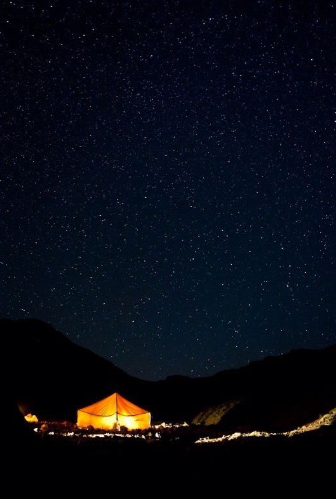
When the sun disappears beyond the horizon, the Sahara changes completely. The heat gives way to cooler air, the landscape becomes quiet, and the night sky takes over.
Desert Nights
Far from the lights of the cities, the desert becomes a world of silence and stars
A night in the Sahara is one of the most memorable parts of travelling through southern Morocco. Once the sun sets, the scale of the landscape becomes difficult to measure and the silence of the desert becomes part of the experience.
Desert nights can also bring a significant change in temperature. After the intense daytime heat, evenings and early mornings can feel surprisingly cool, particularly during the months when overnight temperatures are lower.
On a multi-day trek, camping becomes more than simply a place to sleep. It creates a natural rhythm: walking through the landscape during the day, preparing camp in the evening, sharing a meal and waking with the first light over the desert.
Watch the changing light transform the desert.
Experience the stillness of the desert after dark.
Begin the day as the desert comes back to life.
The best way to understand a landscape this vast is to slow down. Walking takes you beyond the viewpoints and roads, allowing the desert to unfold one landscape at a time.
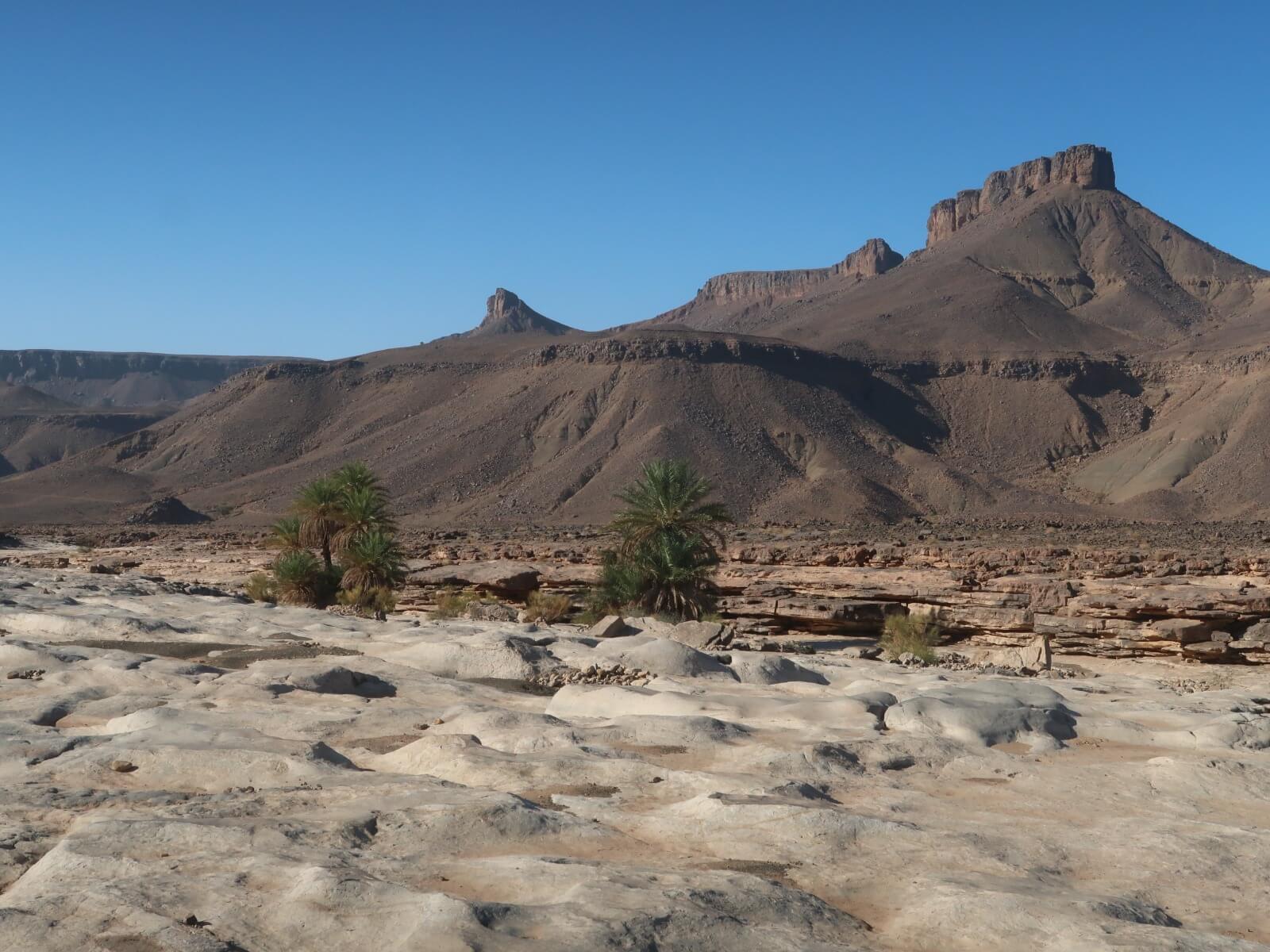
Walking Through the Desert
A slower journey through a landscape measured in horizons
Travelling through the Sahara on foot changes the scale of the journey. Instead of moving quickly between highlights, each day becomes a progression through changing terrain, from rocky ground and dry valleys to sand, dunes and oasis landscapes.
Trekking also creates more time to observe the details of the desert: the changing colour of the mountains, animal tracks in the sand, isolated vegetation, old paths and the small signs of life that can easily be missed from a vehicle.
Our approach is built around the journey rather than simply the destination. We combine walking, remote camping, local knowledge and time in the landscape to create a deeper experience of southern Morocco.
Experience the landscape at walking pace rather than simply passing through it.
Reach landscapes and camping areas that cannot be experienced from a standard desert excursion.
A multi-day journey into southern Morocco, travelling through remote desert landscapes, ancient routes, oasis environments and vast open terrain while camping beneath the Saharan sky.
Duration
8 Days
Style
Multi-Day Trek
Experience
Desert Camping
The Sahara can be visited throughout much of the year, but temperatures and trekking conditions vary significantly between the seasons. For walking and multi-day desert journeys, choosing the right period makes a major difference.
Temperatures gradually become more comfortable after the intense summer heat, making autumn an attractive period for desert trekking and outdoor exploration.
Winter can offer excellent conditions for walking during the day. Nights can become cold, so warm layers and a suitable sleeping system are important.
Spring brings increasingly warm days and can offer a beautiful combination of desert landscapes and seasonal vegetation in some areas.
Daytime temperatures can become extremely high in desert regions. Multi-day trekking requires careful planning and is generally not the period we recommend for long walking stages.
For Trekking
For multi-day walking and camping, we favour the cooler periods of the year. Exact conditions depend on the specific desert region, route and current weather, so every expedition should be planned according to the conditions at the time of travel.
A desert trek is more than reaching a dune or watching the sunset. It is about slowing down, travelling through the landscape and experiencing the Sahara beyond its most familiar viewpoints.
Walking slows the journey down and allows you to notice details of the desert that are easily missed from a vehicle.
Spend nights away from busy tourist areas and experience the quiet atmosphere of the desert after sunset.
Routes, water sources, weather and desert conditions require experience and careful planning.
The focus is on the landscape and the journey rather than rushing through a list of standard tourist stops.
From the first step to the final camp, a multi-day Sahara trek gives you time to experience southern Morocco at a completely different pace.
A multi-day desert trek is a rewarding adventure, but the environment requires preparation. Understanding the terrain, daily rhythm and conditions will help you enjoy the journey.
Multi-day desert trekking involves several hours of walking each day. A reasonable level of fitness and the ability to walk for consecutive days will make the experience much more comfortable.
Depending on the route, walking may include sand, rocky ground, dry valleys, tracks and uneven desert terrain. Distances and conditions vary between expeditions.
Conditions can change significantly between day and night. Sun protection, appropriate clothing and warm layers for cooler evenings are essential.
Water planning is one of the most important aspects of desert travel. Daily logistics are organised around the route, available supplies and local conditions.
Nights are spent in camp, giving you the opportunity to experience the desert after sunset and begin each morning surrounded by the landscape.
Lightweight trekking clothing, sun protection, sturdy walking shoes, personal essentials and suitable layers for cooler desert nights are recommended.
Desert routes, temperatures, water logistics and camping arrangements can vary according to the season and the specific itinerary. We assess conditions and organise each journey accordingly.
Vast horizons, changing light and landscapes shaped by wind, water and time. Explore a glimpse of the Sahara experience before setting out on your own journey.
Southern Morocco
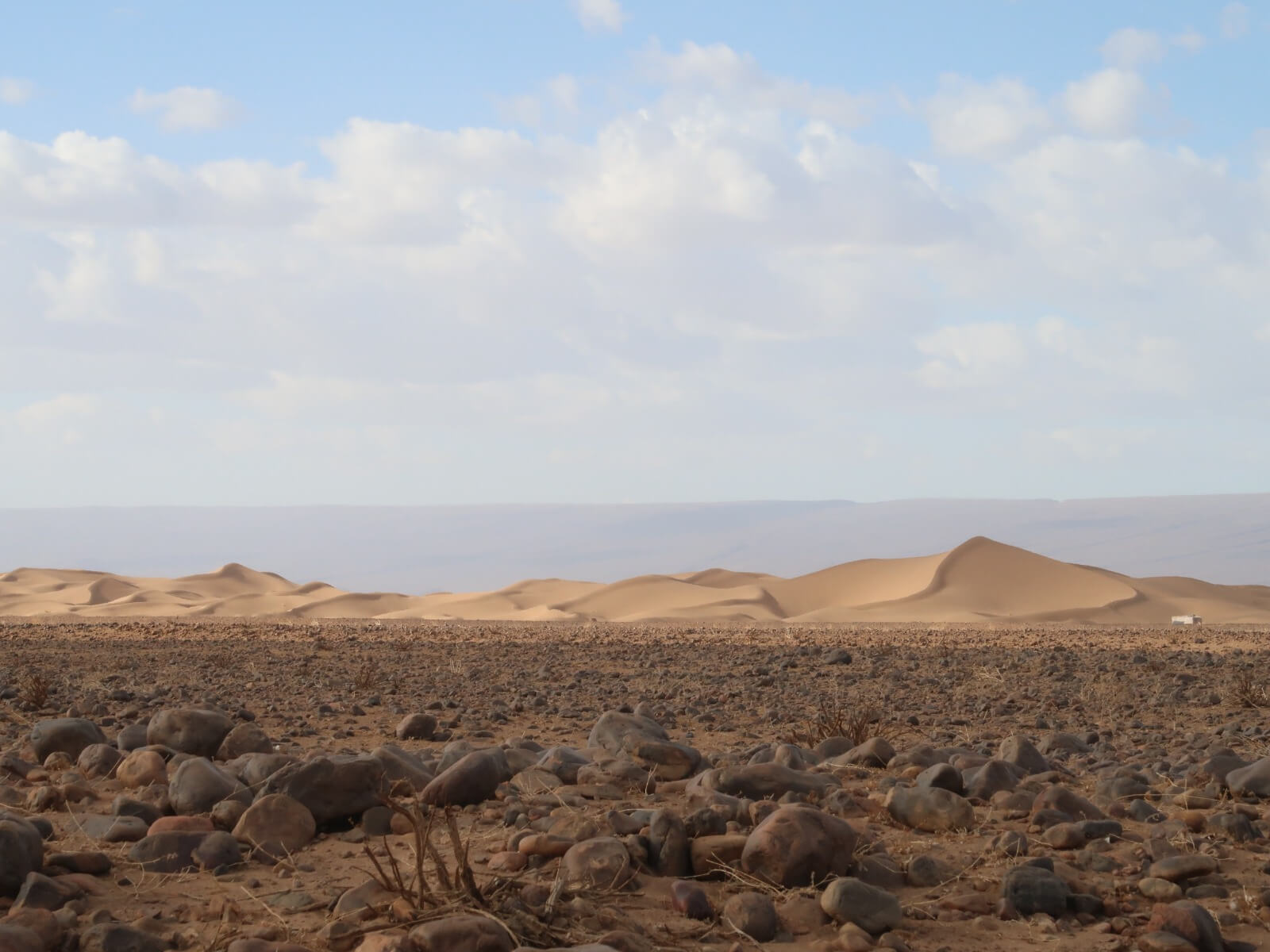
From vast dune fields to hidden oases, every horizon reveals another perspective on southern Morocco.
More expedition photography coming soon.
Sahara Desert • MoroccoA multi-day journey through the landscapes of southern Morocco, combining long-distance walking, remote desert camps, traditional communities and the vast horizons of the Sahara.
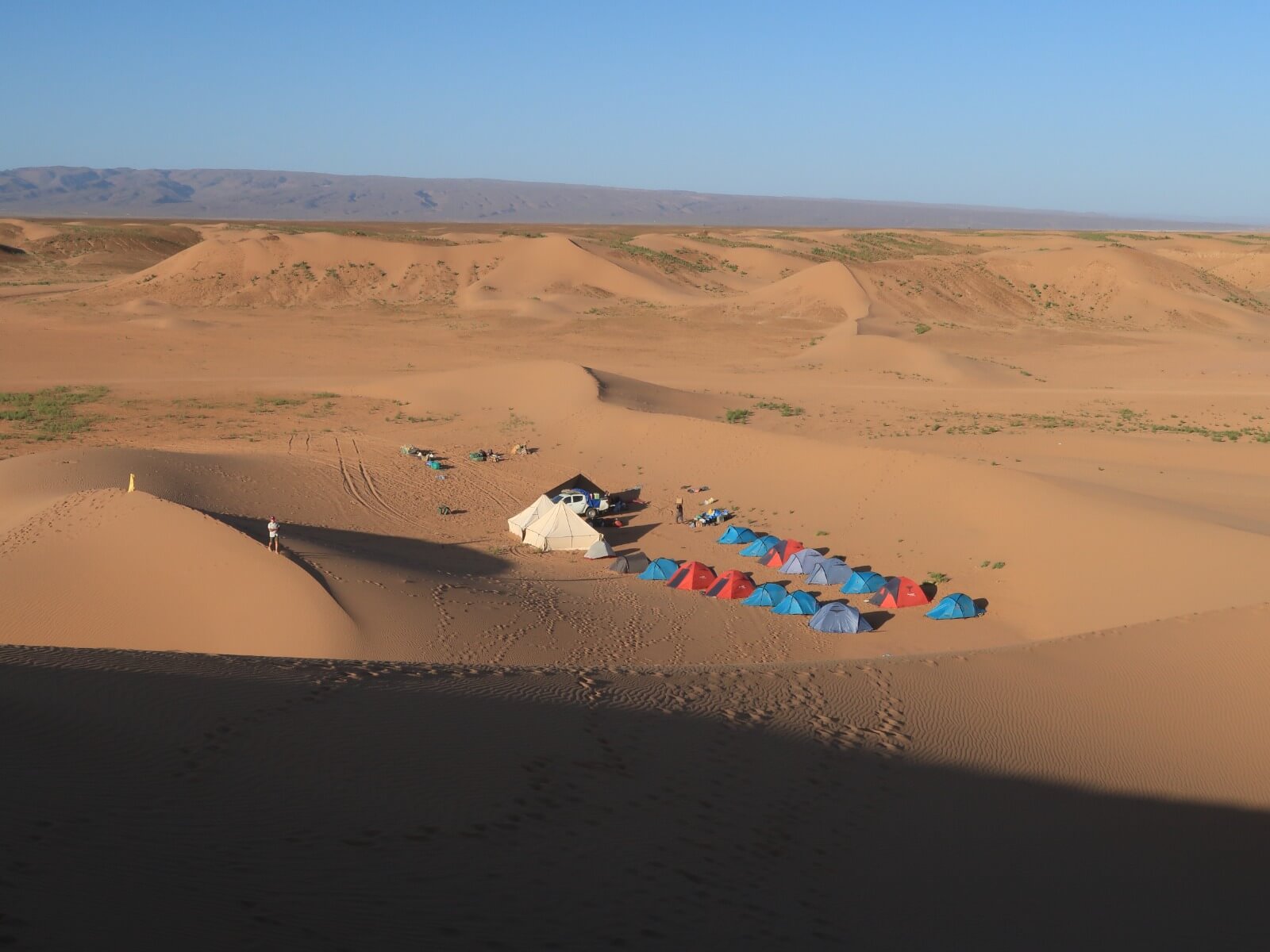
This expedition is designed for travellers who want to experience the Sahara at a slower and more meaningful pace. Instead of limiting the journey to a short desert excursion, several days are spent moving through the landscape on foot.
Each day brings a different perspective on southern Morocco, from open desert terrain and remote valleys to oasis landscapes, traditional settlements and nights beneath the open sky.
Duration
8 Days
Nights
7 Nights
Style
Trekking
Camping
Desert Camps
Expedition Highlights
Everything you need to know about exploring the Sahara Desert on foot, from the best season to trekking conditions and multi-day desert adventures.
The cooler months are generally the most comfortable for walking in the Sahara. Autumn, winter and spring can offer more suitable conditions for multi-day trekking, although temperatures and weather vary between regions and seasons.
Yes. Multi-day trekking allows travellers to explore the desert at a slower pace, walking through dunes, rocky terrain, valleys, oasis areas and remote landscapes depending on the chosen route.
Difficulty depends on the itinerary, walking distance, terrain and weather. Multi-day desert trekking requires reasonable fitness and the ability to walk for several hours on consecutive days.
Multi-day desert expeditions can include nights in organised desert camps and other accommodation depending on the itinerary. Sleeping arrangements are explained in detail on each individual trek page.
Lightweight trekking clothing, comfortable walking footwear, sun protection, a reusable water bottle and warm layers for the evening are important. The exact equipment list depends on the itinerary and season.
Some Sahara routes can be suitable for people with limited trekking experience, while longer expeditions require greater endurance. The appropriate itinerary should be selected according to your fitness and previous walking experience.
No. The Sahara is an enormous and diverse environment containing sand dunes, rocky plateaus, gravel plains, mountains, dry valleys and oasis landscapes. The scenery changes significantly between different regions of southern Morocco.
Explore the available Sahara trekking itineraries and contact Radouane Outdoor to discuss your preferred dates, group size and route. We can then help you choose the expedition that best matches your experience and goals.
Leave the usual desert excursion behind and discover southern Morocco on foot through a multi-day journey across landscapes, villages and remote desert horizons.