Mountain biking in Morocco is at its best when the road ends. In the High Atlas, old mule paths, remote tracks, high valleys and technical singletrack create a riding environment that feels very different from conventional mountain-bike destinations.
Why Mountain Bike the High Atlas?
The High Atlas combines altitude, dramatic relief and an enormous variety of terrain. A single day can move from paved mountain roads to rough tracks, village paths, rocky descents and flowing sections of singletrack.
What makes the region especially interesting for mountain bikers is the connection between the riding and the landscape. Routes pass through working villages, agricultural terraces, forests, high passes and wide mountain valleys.
Singletrack Through Remote Valleys
The High Atlas has an extensive network of traditional mountain paths. Many were created for walking, agriculture and movement between villages long before mountain bikes arrived.
Some sections are smooth and flowing while others are rocky, exposed or technically demanding. The character changes constantly with altitude, geology and weather.
- Rocky mountain singletrack
- High mountain passes
- Village-to-village trails
- Technical descents
- Remote valley riding
Imlil and the Toubkal Region
Imlil sits at around 1,740 metres and is one of the most important mountain gateways in Morocco. From here, routes climb towards high passes and connect with valleys around the Toubkal Massif.
The surrounding terrain gives riders access to steep climbs, mountain tracks and technical descents while remaining close to local communities and mountain infrastructure.
From Marrakech to the High Atlas
A strong multi-day mountain-bike itinerary should not simply string together the biggest climbs. The best routes combine varied terrain, interesting landscapes, good riding and enough time to experience the places along the way.
A typical High Atlas journey can link Marrakech with the Ourika Valley, Imlil, the Imenane Valley, Ouirgane and the Amizmiz region. Each area brings a different character to the ride.
Climbing, Descending and Reading the Trail
High Atlas riding rewards riders who are comfortable with changing terrain. Loose rock, embedded stones, narrow paths and steep gradients can appear unexpectedly.
Technical ability is important, but so is judgement. Conditions, fatigue, altitude and the surface of the trail can all change how a section should be ridden.
Mountain Biking as an Expedition
The most memorable MTB journeys in the High Atlas are not only about kilometres. They are about moving through a mountain region under your own power and seeing the landscape change each day.
Over several days, the experience becomes a combination of riding, mountain culture, local food, changing valleys and the satisfaction of crossing terrain that cannot be experienced from a vehicle.
The Best Seasons for MTB in the High Atlas
Spring and autumn are generally attractive periods for mountain biking in the High Atlas because temperatures are more comfortable at lower elevations and mountain landscapes can be particularly clear.
Summer can work well for higher-elevation routes, although lower valleys may become hot during the middle of the day. Winter brings colder conditions and can introduce snow at higher elevations.
The best itinerary depends on the elevation, route, recent weather and current trail conditions rather than a fixed calendar alone.
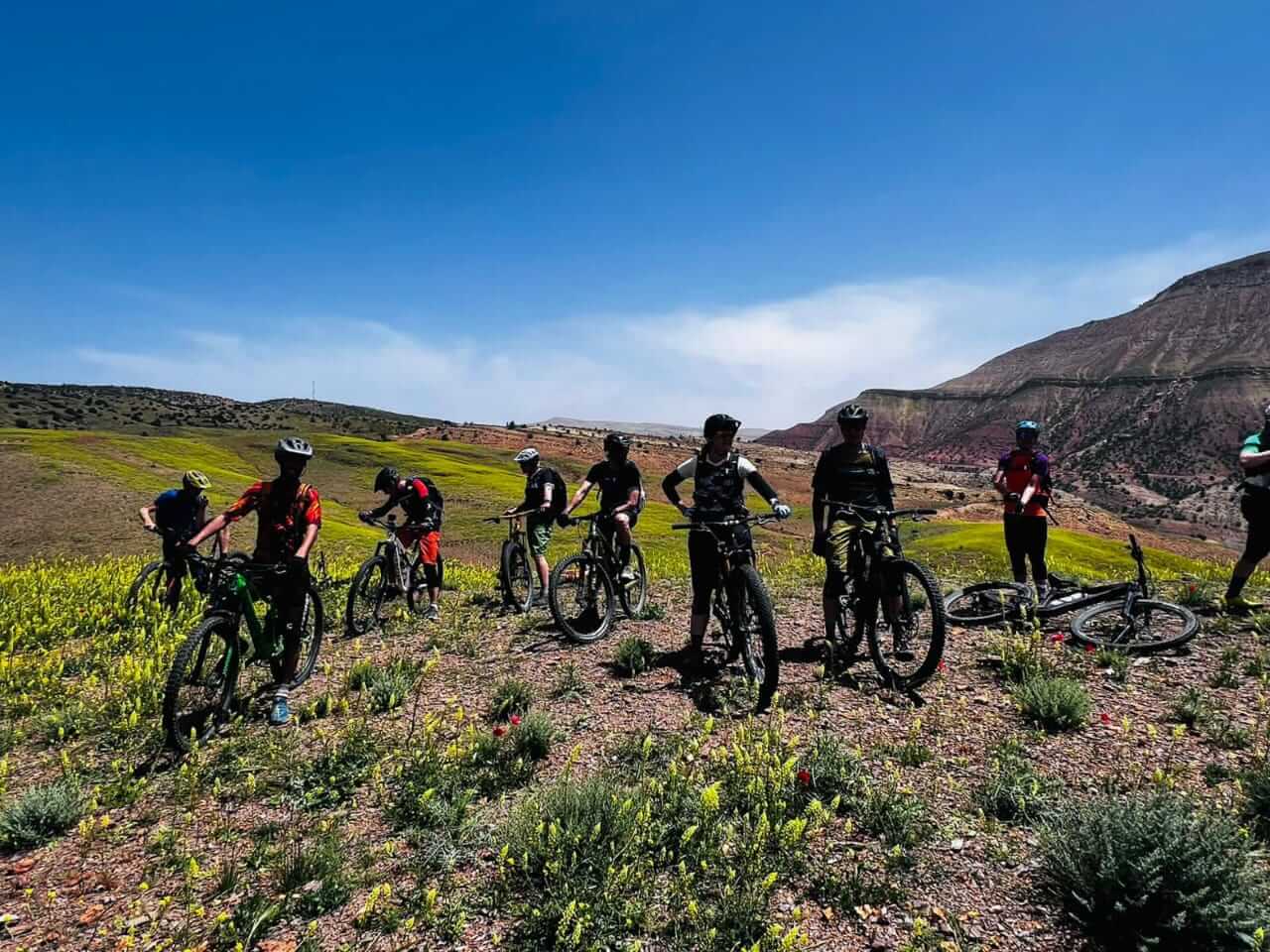
FEATURED MTB EXPEDITION
High Atlas Singletrack Expedition
An 8-day mountain-bike journey through the High Atlas, linking Marrakech with Imlil, the Imenane Valley, Ouirgane and the Amizmiz region through varied mountain terrain and singletrack.
Radouane Outdoor Journal
Keep exploring the mountains
Field notes, mountain guides and stories from Morocco's High Atlas and beyond.
Explore the Journal