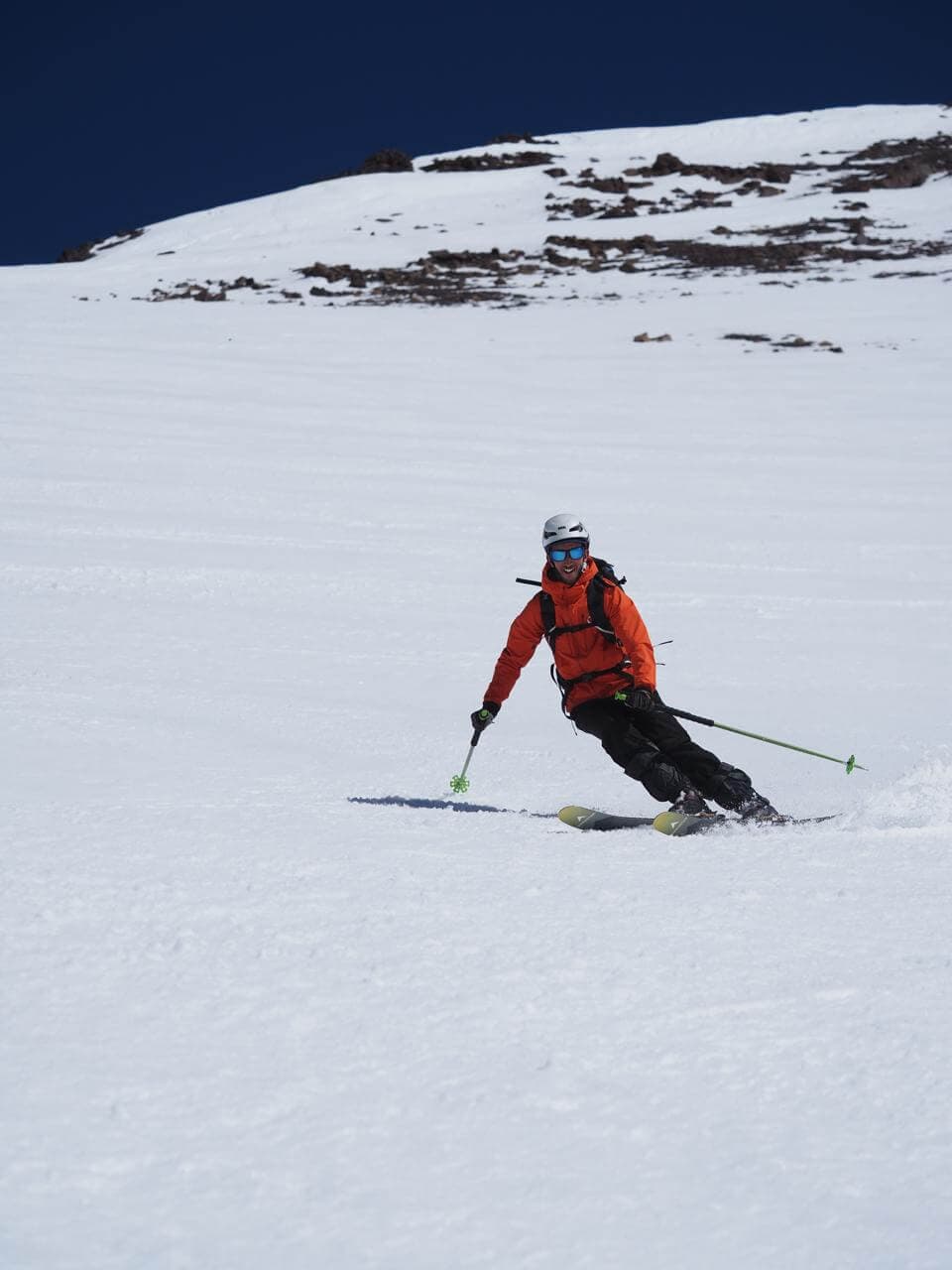
Morocco is not the first country most skiers associate with ski touring, and that is exactly what makes the High Atlas so interesting. Above the villages and valleys are high passes, 4,000-metre summits, narrow couloirs and remote winter terrain where skiing becomes part of a genuine mountain expedition.
Ski Touring in the High Atlas
The most interesting ski terrain in Morocco is found in the High Atlas, particularly around the Toubkal Massif and the mountains extending towards Tachedirt and the Imenane Valley.
Here, winter turns hiking routes and high mountain valleys into a very different environment. Gullies, ravines, bowls, passes and summit slopes can hold skiable snow, while the high peaks rise above 4,000 metres.
The main objectives include Mount Toubkal, Ouanoukrim, Akioud, Afella, Biiguinnoussene, Iguenouane and Aksoual, together with numerous high passes and couloirs.
- Toubkal Massif
- Tachedirt and the Imenane Valley
- Ouanoukrim and Tazaghart
- Iguenouane and Likemt
- Aksoual and its couloirs
The Mountain Principle
In the High Atlas, conditions decide the route. The strongest expedition is not necessarily the one with the most technical objective — it is the one that matches the mountain on the day.
From Imlil to the Toubkal Refuge
Imlil is one of the principal gateways into the Toubkal Massif. From the village, the route follows the Assif n-Aït Mizane valley towards Aremd before continuing through increasingly barren high-mountain terrain.
The trail passes cultivated terraces and walnut trees before entering a more rugged landscape dominated by juniper, rock and high mountain slopes. Above Aremd, the route reaches Sidi Chamharouch, a well-known landmark on the approach to the Toubkal Refuge.
In winter, snow conditions can transform this familiar summer approach completely. Depending on the snowpack, skis may become useful or necessary higher in the valley, and access can become considerably more demanding after heavy snowfall.
High Passes Around the Toubkal Massif
For strong ski mountaineers, some of the most rewarding objectives are not necessarily summits. High passes create natural lines between valleys and often provide excellent ski terrain when the snowpack is well established.
Tizi-n-Ouagane rises to around 3,750 metres and provides access towards the Agoundis side of the massif. The pass can also form part of longer objectives towards Ras n-Ouanoukrim and Timesguida n-Ouanoukrim.
Tizi-n-Ouanoums, at approximately 3,684 metres, is another major high pass. Wind exposure and solar radiation can make its snow conditions variable, and firm sections may require crampons or ski crampons.
Other important high points include Amrharas n-Igliouia and the Tizi-n-Bou Imrhaz / Tizi-n-Ouanoukrim area, where broad mountain bowls and steeper connecting terrain can create excellent ski lines in suitable conditions.
Toubkal, Ouanoukrim and the 4,000m Summits
Mount Toubkal reaches 4,167 metres and is the highest summit in Morocco and North Africa. Reaching the summit on skis is a serious ski-mountaineering objective rather than a conventional resort descent.
The mountain offers several approaches and combinations. The south and north sides present different terrain, and the possibility of linking the two through a summit traverse depends heavily on snow stability, wind, visibility and the condition of the ridges.
The Ouanoukrim group adds several more demanding objectives. Ras n-Ouanoukrim rises to approximately 4,083 metres, while Timesguida n-Ouanoukrim reaches around 4,098 metres. Akioud, Afella and other summits around the massif provide further technical objectives for experienced teams.
- Mount Toubkal — 4,167 m
- Timesguida n-Ouanoukrim — approximately 4,098 m
- Ras n-Ouanoukrim — approximately 4,083 m
- Afella n-Ouanoukrim — approximately 4,015 m
- Biiguinnoussene — approximately 4,002 m
Couloirs, Ravines and Alpine Ski Lines
The Toubkal Massif contains numerous narrow gullies and couloirs that become serious ski-mountaineering objectives. These routes are very different from standard ski touring: steepness, exposure, snow quality and the ability to transition between skiing and mountaineering become critical.
The North Couloir of Ras n-Ouanoukrim is one of the more serious objectives in the massif. It provides a narrow line through the mountain and can involve sustained steep terrain and firm snow.
The Ikhibi South and Ikhibi North routes on Toubkal also introduce steeper terrain and exposed sections. Depending on conditions, crampons, an ice axe and rope may be required, and skis may need to be carried on parts of the route.
The Clochetons de l'Ouanoukrim and Irhzer n-Tadat add further technical lines. These objectives should only be considered when current snow stability, weather, route conditions and the experience of the team are appropriate.
Tachedirt, Likemt and Iguenouane
North-east of the Toubkal Massif, the mountains around Tachedirt and the Imenane Valley offer a different character of ski touring. The landscape is broader in places, while steep ridges and high summits create a series of natural ski objectives.
Tachedirt sits at roughly 2,400 metres and is one of the highest inhabited villages in the High Atlas. Its position makes it an important base for exploring the surrounding winter terrain.
From Imlil, the traditional route crosses Tizi n-Tamatert at approximately 2,366 metres before descending towards the Imenane Valley. In winter, snow can completely change the appearance of the villages, terraces and surrounding ridges.
Tizi Likemt reaches approximately 3,555 metres. Its upper slopes can become firm and wind affected, while the surrounding ravines provide several possible variations depending on the snowpack.
Iguenouane: A Classic Objective Above Tachedirt
Iguenouane rises to approximately 3,882 metres and is one of the most interesting ski objectives in the Tachedirt area. The route climbs through the upper Imenane terrain towards the broad slopes beneath the summit.
The character of the mountain changes considerably through the season. Winter can bring powder, deeper snow or variable crust, while spring can provide more predictable corn conditions when temperatures and aspect align.
The summit also opens views across the surrounding High Atlas, including the Toubkal Massif and the mountains around Oukaïmeden. The descent can be particularly rewarding when the snowpack provides a continuous line.
The Couloirs of Aksoual
Aksoual is one of the defining technical mountains of the Tachedirt region. Its steep walls and complex couloir system attract experienced ski mountaineers looking for serious terrain.
Irhzer n-Temda is one of the most dramatic lines. The route climbs from the Tachedirt side towards the Arhzane area before entering steeper terrain. The upper section can become narrow and significantly steeper than the surrounding slopes.
The western side towards Azrou n-Tamadôt provides another major ski-mountaineering environment. Snow retention varies with aspect and elevation, and rock bands can interrupt otherwise continuous snowfields.
The North Face of Aksoual is a much more serious alpine objective. Its complex couloir system and steep sections require excellent technical ability, appropriate equipment and careful assessment of the conditions.
Ski Circuits and Haute Route Objectives
For very fit and experienced skiers, the High Atlas also allows longer circuits that combine several passes, valleys and summit areas in a single journey.
Routes such as the Tour de l'Akioud, Tour du Biiguinnoussene and Clochetons de l'Ouanoukrim, Tour de l'Afella n-Ouanoukrim and Tour du Ras n-Ouanoukrim can involve substantial elevation gain and complex route finding.
These are not simply longer versions of normal ski tours. They combine ski touring with ski mountaineering, transitions, exposed terrain and changing snow conditions. The correct route can only be chosen after assessing the mountain on the day.
- Tour de l'Akioud
- Tour du Biiguinnoussene and Clochetons
- Tour de l'Afella n-Ouanoukrim
- Tour du Ras n-Ouanoukrim
Snow, Aspect and Mountain Conditions
Ski touring in Morocco is highly dependent on the snowpack. Unlike a developed ski resort, there is no prepared network of pistes, snowmaking system or avalanche-control infrastructure across these mountains.
Snow can be excellent in one valley and poor only a short distance away. Wind can strip exposed ridges while loading gullies, and solar radiation can transform a firm morning surface quickly.
Aspect is particularly important. North-facing terrain may preserve snow for longer, while south-facing slopes can transform rapidly under strong mountain sun. Elevation, recent snowfall, wind and temperature all interact.
For this reason, route selection should never be based solely on a description of a line. A route that was excellent on one day may be unsuitable after a storm, a wind event or a period of rapid warming.
The Best Time for Ski Touring in Morocco
The main ski-touring season generally falls during the winter and spring months, but the exact window changes from year to year.
Winter can offer fresh snow and good coverage at lower elevations when storms have been generous. Spring can bring more stable weather and classic corn-snow opportunities on suitable aspects, particularly on higher objectives.
April and May can be particularly interesting for some high and steep routes, but later-season snow can also become highly sensitive to warming and daily freeze-thaw cycles.
The best time is therefore not a single fixed month. It is the combination of adequate snow, stable weather, appropriate temperatures and a route that matches the current conditions.
Experience, Equipment and Mountain Skills
Moroccan ski touring ranges from demanding high-mountain tours to serious ski-mountaineering objectives. Experience requirements therefore vary significantly from one route to another.
For straightforward touring, strong off-piste skiing and efficient skinning are essential. For steeper objectives, skiers may need confident kick turns, secure movement on firm snow, crampon technique, avalanche awareness and experience managing exposure.
Depending on the objective and conditions, essential equipment can include touring skis, skins, poles, avalanche transceiver, shovel and probe, ski crampons, crampons, ice axe, helmet and appropriate mountain clothing. A rope and additional mountaineering equipment may be required for some objectives.
Equipment should always be selected according to the route and current conditions. The mountains are remote enough that preparation matters.
- Strong off-piste and ski-touring ability
- Avalanche awareness and snowpack judgement
- Crampon and ice-axe skills for technical objectives
- Ability to manage altitude and long mountain days
- Appropriate touring and mountaineering equipment
Why Local Mountain Knowledge Matters
The High Atlas is a mountain environment where local knowledge can make a major difference. Snow distribution, route conditions, access, water, village logistics and changes in the terrain all matter when planning a multi-day expedition.
A route described in a guidebook or article is only a starting point. A local mountain guide can adapt the objective according to the snowpack, weather, altitude, fitness of the group and technical conditions encountered during the expedition.
That flexibility is one of the most important principles of ski touring in Morocco: choose the mountain that is right for the conditions rather than forcing a predetermined route.
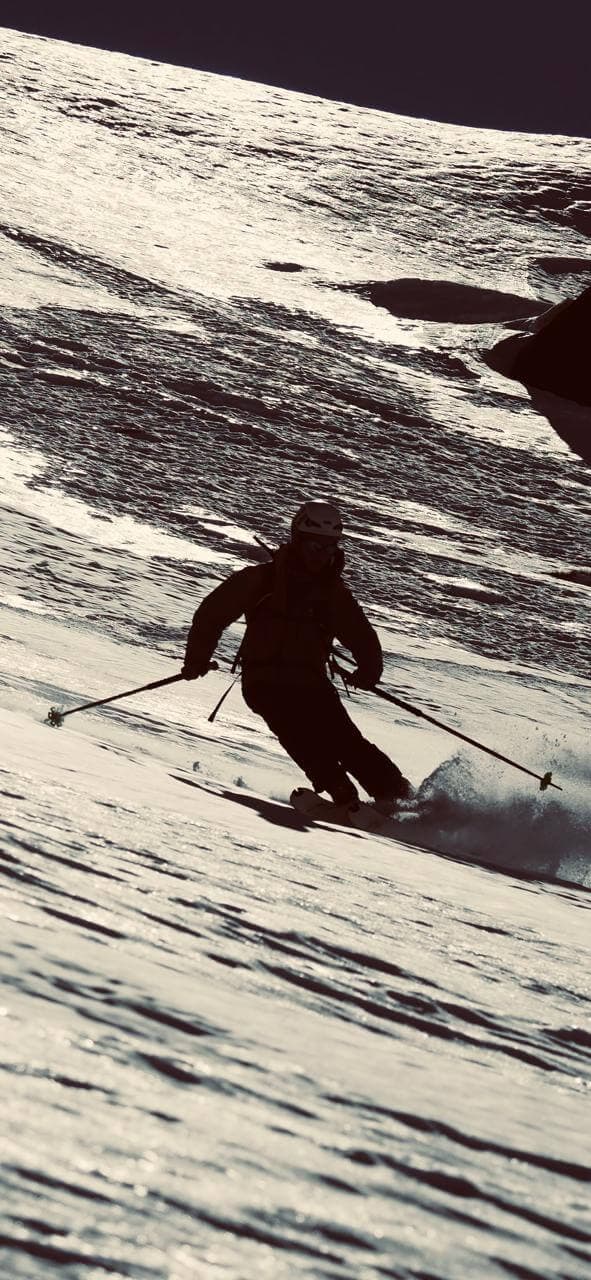
FEATURED SKI TOURING EXPEDITION
Toubkal & Tachedirt Ski Touring Expedition
An 8-day ski-mountaineering expedition linking the Toubkal Massif with the high valleys around Tachedirt. A mountain journey built around changing snow conditions, high passes, summit objectives and the character of the High Atlas.
Radouane Outdoor Journal
Keep exploring the mountains
Field notes, mountain guides and stories from Morocco's High Atlas and beyond.
Explore the Journal