The High Atlas offers a rare combination for trail runners: dramatic elevation, long mountain climbs, technical terrain, high passes and villages connected by centuries-old paths. It is a landscape where running becomes as much about moving through the mountains as it is about speed.
Why Run in the High Atlas?
The High Atlas is naturally suited to mountain running. Trails climb from valley villages to high passes, cross ridges and descend through remote valleys, creating routes with substantial vertical change.
Unlike many established trail-running destinations, Morocco still offers a strong sense of exploration. Routes frequently pass through working villages and remote terrain rather than purpose-built trail networks.
The Runner's Principle
In the High Atlas, distance is only part of the challenge. Vertical gain, altitude, terrain and the mountain itself shape every run.
Running at High Elevation
Altitude changes the experience quickly in the High Atlas. A runner who feels comfortable at valley level may notice the difference considerably once a route climbs above 3,000 metres.
Pacing becomes more important, particularly on long climbs. Acclimatisation, hydration, nutrition and the ability to manage effort over several hours can matter more than raw speed.
From Village Paths to High Ridges
High Atlas trails range from compact village paths to rocky mountain tracks and narrow technical sections. Some routes are runnable for long stretches, while others naturally become fast hiking on steep terrain.
This mixture is part of the appeal. A mountain-running day can include flowing descents, sustained climbs, rocky traverses and long sections where the landscape becomes more important than the pace.
- Village trails
- Rocky mountain paths
- High passes
- Long technical descents
- High-altitude ridges
Trail Running Around Toubkal
The Toubkal Massif provides some of Morocco's most dramatic mountain-running terrain. Routes around Imlil can quickly gain altitude and connect with the high mountain environment surrounding the country's highest summit.
Running at these elevations requires a different approach from ordinary road or low-altitude trail running. Weather can change quickly, terrain can be rough and the combination of distance and vertical gain can make even familiar routes demanding.
What Fitness Do You Need?
A strong trail-running base is more useful than simply being fast on flat ground. Mountain routes reward runners who are comfortable with sustained climbing, descending, uneven surfaces and long days.
For multi-day trail-running journeys, the ability to recover between days becomes just as important as performance during a single effort.
When to Run in Morocco
Spring and autumn are often attractive periods for trail running in the High Atlas, with generally more comfortable temperatures in many valleys.
Summer can work well for higher routes, particularly when the itinerary is designed around cooler early starts and elevation. Winter introduces colder conditions and possible snow at higher elevations.
The ideal period depends on altitude, route, recent weather and the type of running you want to do.
Trail Running as a Mountain Journey
The strongest trail-running experiences in Morocco are not necessarily races. They are days spent linking valleys, climbing passes and moving through landscapes that change continuously.
For runners used to organised trail networks, the High Atlas offers something different: a mountain environment where local knowledge, route choice and judgement are part of the experience.
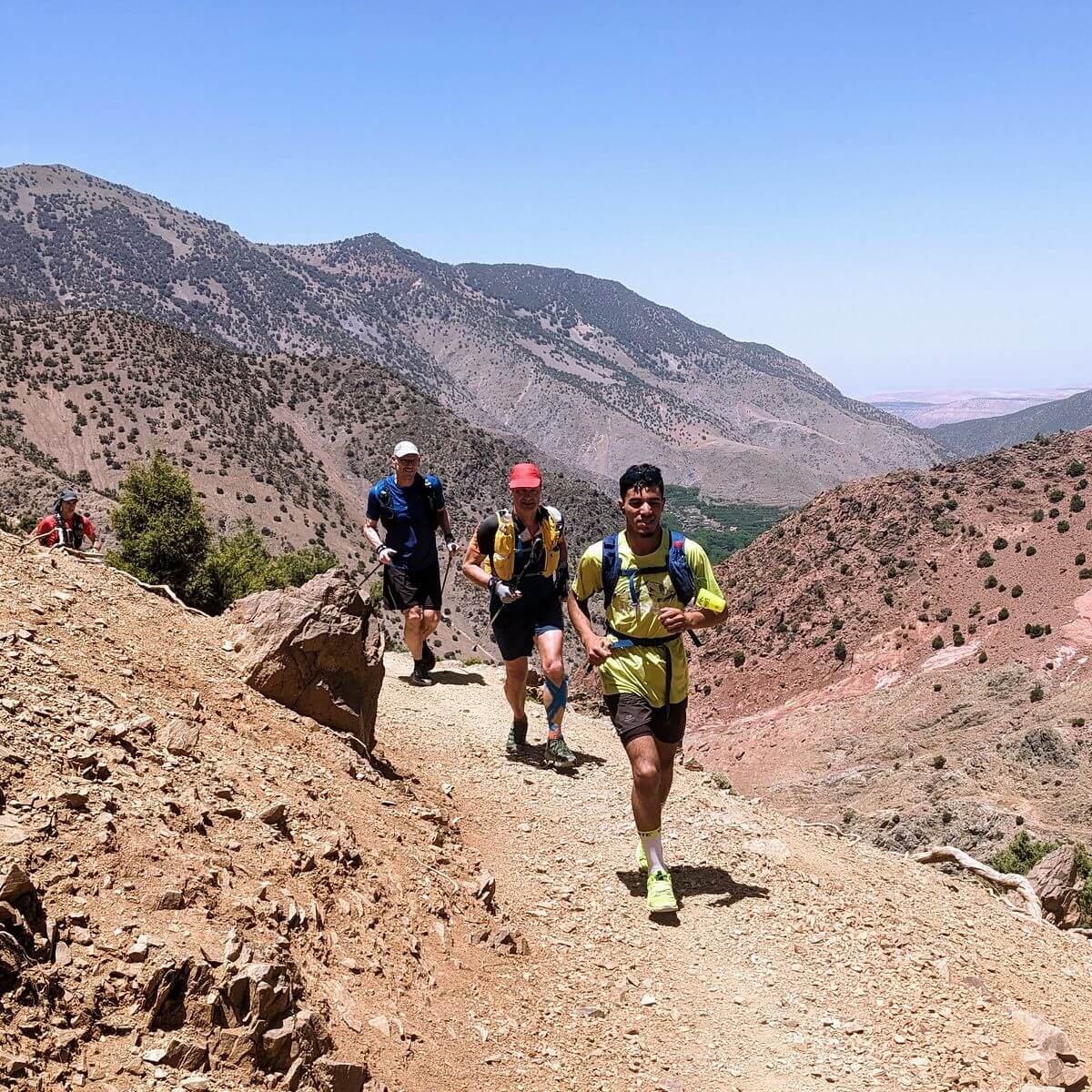
TRAIL RUNNING IN MOROCCO
Trail Running Adventures
Explore Morocco's mountain trails through challenging multi-day running journeys, with high passes, long climbs and the terrain of the High Atlas at the centre of the experience.
Radouane Outdoor Journal
Keep exploring the mountains
Field notes, mountain guides and stories from Morocco's High Atlas and beyond.
Explore the Journal